An enhanced Google Docs experience on mobile tablets

Earlier this year, we introduced the Google Docs app for Android. Since then, many users have downloaded the app and enjoyed the benefits of being able to access, edit and share docs on the go.

Today’s update to the app makes Google Docs work better than ever on your tablet. With an entirely new design, we’ve customized the look to make the most of the larger screen space on tablets. The layout includes a three-panel view, which allows you to navigate through filters and collections, view your document list, and see document details, all at once.

Looking at the details panel on the right side, you can see a thumbnail to preview a document and its details before opening it. From the panel, you can see who can view or edit any doc.

New 3-panel view for improved browsing

Autocomplete makes sharing with others on the go even easier

These features are now available in 46 languages on tablet devices with Android 3.0+ (Honeycomb) and above.

You can download the app from the Android Market and let us know what you think in the comments or by posting on the forum. Learn more by visiting the help center.

Posted by: David Loxton, Product Manager

Microsoft reveals new TV providers including Verizon and Comcast coming to Xbox 360 (video)

Just as the rumors indicated, Microsoft is bringing video from a number of providers beyond the ones it initially announced to the Xbox 360 in its fall update, including big guns like Verizon and Comcast. While Verizon is promising “a selection” of its live TV channels on the Xbox 360 as expected, Comcast is only bringing its Xfinity TV video on-demand offerings (no AnyPlay powered live TV — yet) to subscribers when it launches “in the coming months.” Other notable providers include Lovefilm (UK, Germany), BBC TV (UK), HBO Go, and Syfy. As promised during E3, the services integrated with Xbox will offer support for search across all available video, as well as support for Kinect voice and gesture controls. The universal search is looking good since it pulls together various services into one UI (as we discussed on our podcast yesterday), but the reality is content providers and geographical limits on what services you can pick from are still throwing up walls between users and content. Check after the break for PR detailing what you’ll be able to access and where, as well as a video intro to all the tasty new TV services.

Continue reading Microsoft reveals new TV providers including Verizon and Comcast coming to Xbox 360 (video)

Microsoft reveals new TV providers including Verizon and Comcast coming to Xbox 360 (video) originally appeared on Engadget on Wed, 05 Oct 2011 12:39:00 EDT. Please see our terms for use of feeds.

Permalink Major Nelson  |  sourceMicrosoft Technet, Verizon, Comcast, MS PR  | Email this | Comments

Android Gingerbread has growth spurt, grabs 38.2 percent device share

Gingerbread has apparently made a substantial mark on Android users, with new figures showing it holds a 38.2 percent share of all Google OS-powered devices. That’s some kind of growth from the one percent sliver it held earlier this year. Froyo still remains dominant at 45.3 percent, but fragmentation continues to shrink, with 95.7 percent of all Google-coated devices now running Android 2.1 or above. These figures, taken from Android Market statistics over the last two weeks, give a pretty good illustration of the gulf between Android smartphone and tablets, as well, with Honeycomb versions accounting for a meager 1.8 percent. But the tablet version will likely get a boost from Ice Cream Sandwich — which, as we all know, is just around the corner.

Android Gingerbread has growth spurt, grabs 38.2 percent device share originally appeared on Engadget on Wed, 05 Oct 2011 08:56:00 EDT. Please see our terms for use of feeds.

Permalink Mobile Syrup  |  sourceAndroid Developers  | Email this | Comments

You can have iPhone 4S, I’ll take Samsung Galaxy S II

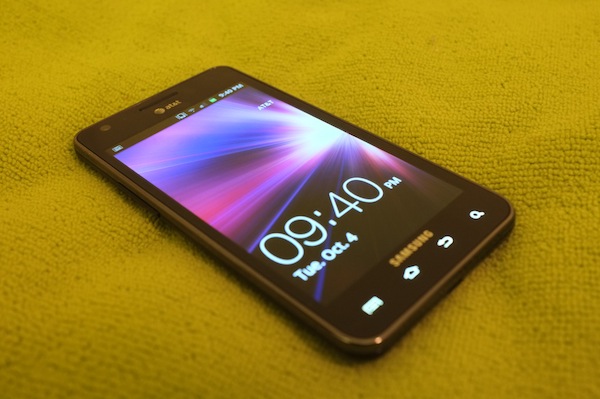
I suspected for some time that rumors of iPhone 4S were correct. That meant, based on past Apple release schedules, the new handset would be more evolutionary than revolutionary and likely nothing more than catch-up to newer Android models from HTC and Samsung. So on Sunday, while the InterWeb filled with excitement and speculation about iPhone 5, I trucked over to AT&T and bought Samsung Galaxy S II, which went on sale that day.

Apple announced iPhone 4S yesterday, and I have no regrets choosing the S2. I have absolutely no interest in Apple’s new handset and wouldn’t if I still owned iPhone 4. For Android users tempted by Apple marketing, don’t be. Nexus Prime is coming, and Galaxy S II is here now. It’s an exceptional smartphone by most every measure. With iPhone 4S, Apple is the innovation follower, not leader here.

Not that I’m surprised. Yesterday afternoon, my colleague Tim Conneally writes: “Judging by this season’s iPod refresh, unveiled on Tuesday, Apple isn’t trying to change anything about its market-leading portable media players yet”. Later chat to Tim: “I could plagiarize your first two paragraphs to describe iPhone 4S”. I chose to quote him instead, but the same observation applies to iPhone 4S. There isn’t much new here. Apple is following where others have tread.

Incremental Improvements

In March, I explained why iPad 2 isn’t so radically different from the original. Apple follows a longstanding pattern: A showstopping product debuts with modest hardware features but something else nevertheless killer — something people want, or think they do. Apple then iterates — incrementally improves — the product over time. The process is essential to maximizing margins. So the original iPhone was good and the 3G better, 3GS better still and the 4 much better, by iteration.

Actually, iPhone 4 qualifies as a major redesign, resetting the incremental process at a higher level and starting it over. iPhone 4S clearly follows the approach of incremental development, by offering small improvements with substantial benefits, without dramatically changing basic form and function. It’s the approach I expected, which is major reason for my ignoring the much crazed iPhone 5 hype and rumors.

Please read counterpoint: “I’ll buy the iPhone 4S, and so should you”

Not surprisingly then, iPhone 4 and 4S are nearly indistinguishable at first glance. The case designs are identical, screen sizes are the same and display resolution and pixel density are unchanged as are overall device functions. But as analyst Ian Fogg points out in a comment to one of my Google+ posts: “There is new hardware. Everything about the iPhone 4S is new apart from the screen and industrial design. It has new dual mode radios, new chipset and baseband, new dual-core CPU, new dual-core graphics, larger 64GB capacity option [and more]”.

Catch-up and Copycat

But there’s more than the typical incremental improvement process here. Android and Samsung’s Galaxy S series lept ahead of iPhone and iOS. In July, I identified five things that iOS borrows — my polite way of saying copies — from Android. That’s the short list.

While Apple files patent and other intellectual property claims against Samsung, iPhone 4S reveals the real copycat right down to “S” in the product name. It’s iPhone 4S pitted against Galaxy S II. This kind of confusing competitive product naming has gone on for years, particularly around similar version numbers. Apple is but one of many vendors doing this.
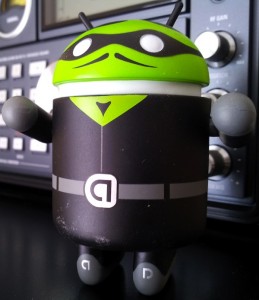
Meanwhile, Apple has chosen to catch up to competitor features. So like the S2 and some other high end Android smartphones iPhone 4 features an 8MP camera that seemed simply amazing during yesterday’s launch event — but in reality not so remarkable. Apple marketing chief Phil Schiller touted the 8-megapixel camera that produces 3264 x 2488 pixel images that can be printed 8 X 10. Oh yeah? The S2 camera also is 8MP and produces same resolution images that can be printed the same. In a brilliant marketing move, Schiller compared time to first shot — 1.1 seconds for iPhone 4S and 2 seconds for Galaxy S II. That comparison avoids the stickier issue of photo quality. Now why is that?

Galaxy S II is loaded with some surprising photo features, such as adjusting focus to macro or face detection, setting exposure compensation, choosing ISO (auto to 800), enabling blink detection or changing focus point (by dragging with your finger), among other features. The smartphone shoots 1080p video, another catch-up feature for iPhone 4S. Both phones come with photo- and video-editing software. I snapped the quick shot of the Android collectible using the S2 camera.

Both phones have dual-core processors, robust graphics capabilities, capacitive touchscreens and high-resolution displays. Like its predecessor, Apple’s Retina display has 960-by-640-pixel resolution at 326 ppi. The S2’s resolution is less — 800 x 400 at 218 ppi. However, Samsung’s proprietary Super AMOLED Plus display is brighter and produces richer contrast and more vivid colors. There is simply no comparison which display pops when the Galaxy S II sits alongside iPhone 4.

Geek Nirvana

Apple finally supports pseudo-4G on iPhone; 4S’ top bandwidth is 14.4Mbps, or double its predecessor. But my Galaxy S II can do 21Mbps and the T-Mobile model twice that. Apple’s and Samsung’s smartphones are both rated for 8 hours continuous talk time. S2 battery life is exceptional, and in my two days use significantly longer than iPhone 4. There’s another catch-up feature.

iPhone 4S has Bluetooth 4.0, which is a nicety. The S2 is considerably larger because of its display (4.27 inches compared to 3.7 inches for iPhone 4S) but lighter. Some people are enamored by iPhone 4’s Siri voice command/interaction feature. Android has had voice dictation and command capabilities since before iPhone 4 shipped in summer 2010. It’s another catch-up capability.

The point: Galaxy S II is as good or much better than iPhone 4, which major features play catch-up or copycat. The T-Mobile model, which goes on sale October 12, might be the best smartphone available, with its 1.5GHz dual-core Snapdragon S3 processor and other features. This Engadget headline makes the point: “Samsung’s Galaxy S II for T-Mobile proves that unicorns do exist". Engadget got a review unit; I didn't. But I could say the same about the AT&T model, which is fast and fluid — really unbelievable.

I haven’t enjoyed using a cell phone this much or had such a “wow” experience in years. The original iPhone would be closest. I'll explain more in my upcoming review why Galaxy S II is so good. CNET gives the AT&T S2 "editor’s choice“, by the way.

I even like Samsung’s TouchWiz UI, which adds lots of color and freshness to stock Android, without slowing it down — to my surprise.

While unboxing and using Galaxy S II for the first time, I had such a laugh thinking about Apple accusing Samsung of copying iPad and iPhone. The S2 and iPhone 4/4S don’t look alike, by styling, design or size — and most certainly not by user interface. TouchWiz is colorful and distinctive compared to iOS. Then there are the many customization features exposed by Android or TouchWiz not available to iPhone users.

I’ve achieved geek nirvana using Samsung’s flagship smartphone. Enjoy your life with the Pod people. I aspire for something more. You can have iPhone 4S, I’ll take Galaxy S II.

Photo Credits: Joe Wilcox

Samsung teases next week’s ‘Unpacked,’ offers a momentary glance at a mysterious device

See that image above? It’s Samsung’s way of being sly. The company put out a teaser video for its “Google Episode” of Unpacked occurring on October 11th (we’ll be there live, by the way), stating that “something BIG is coming.” And if you’re not looking close enough, you may completely miss the brief glimpse it gave us of a device with a curved screen. The vid doesn’t go so far as to loudly exclaim that this mystery device is the Nexus Prime, of course, but c’mon — we’re picking up what Sammy’s putting down. Check out the video below to do some sleuthing of your own.

Update: Samsung amended the end of the video to add the words “Ahead of the curve.” Discuss.

[Thanks to everyone who sent this in]

Continue reading Samsung teases next week’s ‘Unpacked,’ offers a momentary glance at a mysterious device

Samsung teases next week’s ‘Unpacked,’ offers a momentary glance at a mysterious device originally appeared on Engadget on Wed, 05 Oct 2011 01:23:00 EDT. Please see our terms for use of feeds.

Permalink BriefMobile  |   | Email this | Comments

iPhone 4S vs. the smartphone elite: Galaxy S II, Bionic and Titan

Now that we know how the iPhone 4S stacks up against the iPhone 4, let’s take a look at how Apple’s latest smartphone compares to its mightiest competitors on the other major platforms — Android and Windows Phone. In Google’s camp we chose the superlative Samsung Galaxy S II models (focusing on the announced US variants) along with the Motorola Droid Bionic for its qHD and LTE chops. We then picked the upcoming HTC Titan to bat for Microsoft’s team. RIM’s not included here since it’s still stuck in the junior leagues. We left out the intriguing Nokia N9 because it’s a niche player. Check out the fancy table after the break — the results are pretty clear cut!

Continue reading iPhone 4S vs. the smartphone elite: Galaxy S II, Bionic and Titan

iPhone 4S vs. the smartphone elite: Galaxy S II, Bionic and Titan originally appeared on Engadget on Tue, 04 Oct 2011 16:02:00 EDT. Please see our terms for use of feeds.

Permalink   |   | Email this | Comments

ASUS Unfazed By Kindle Fire; No Delay For Transformer 2

In contrast to many manufacturers such as RIM and HTC, who have answered the successful introduction of Amazon’s Kindle Fire by reducing the price of their tablet PCs to remain competitive, ASUS appears to remain unfazed. CEO Jerry Shen says there will be no price change for their current Eee Pad Transformer, nor will there be any delay in the Transformer 2 (which will pack that sweet NVIDIA Tegra 3 quad-core processor).  Shen also adds that the upcoming PC tab will sell for $499, a hundred bucks more than its predecessor.

ASUS’ confidence is quite understandable if you consider its 2011 shipment forecast, which projects the sale of 1.5-2 million tablet PCs and of which one million units have already been moved in just the first three quarters of the year. The Transformer 2 would undoubtly put them on track to meet or exceed their projections.

ASUS Unfazed By Kindle Fire; No Delay For Transformer 2

iCub crawls closer toward the Robopocalypse (video)

Another day, another augur of doom for humanity — iCub has been spotted in the wilds of the IROS Expo in San Francisco. The cute (in a Demon Seed sorta way) robot is designed to replicate the trial-and-error learning process of a three year-old. We’ve already seen it learning how to speak and shoot arrows, and now it wants to show off it’s… erm, recently improved crawling abilities. Head down after the break and you can see it slowly navigating the dangerous carpets of the convention floor. That’s iCub, SkyNET drones, Cyborg Rats and Robotic Bulls all in the last month. Does anyone else think the Robopocalpyse will hit before Christmas?

Continue reading iCub crawls closer toward the Robopocalypse (video)

iCub crawls closer toward the Robopocalypse (video) originally appeared on Engadget on Tue, 04 Oct 2011 11:30:00 EDT. Please see our terms for use of feeds.

Permalink Technabob  |  sourceiCub  | Email this | Comments

First ‘Nexus Prime’ photo leak shows buttonless device with 720p display

Nexus Prime (image credit: GSMArena)

Who said it was iPhone day? Here we have what looks like the first leaked photo of the next Nexus device, the Samsung 'Nexus Prime', powered by the next version of Android, codename Ice Cream Sandwich. The shot, obtained by GSMArena, appears to confirm rumors of a device with Honeycomb-style software buttons in place of the traditional hardware keys used by current Android phones.

The leaked photo would also seem to back up reports of the Prime shipping with a 720p (1280×720) display, apparently in a 4.6-inch chassis, according to GSMArena. As you'll see in the image, that makes for an ample DPI of 320, all but matching the iPhone 4's Retina Display, which manages 326 DPI.

That's about all we can tell for sure given the small size of the image. If we were to speculate further, we might say the trim around the chassis seems more metallic than that of the Nexus S. Perhaps it'll ship with a metal or plastic chrome back, or maybe it's just a trick of the light. Only one thing's for certain — all will be revealed at Samsung's Unpacked event next week at CTIA.

Source: GSMArena

Microsoft delivers official Hotmail app to Android Market

I guess it’s better late than never. Microsoft just released the official Hotmail app, and they loaded it with features:

  • With push email get messages on your phone without delay
  • Synced calendar and contacts
  • View your folders in Hotmail, including sub folders
  • Send pictures from your phone using Hotmail
  • Supports multiple Hotmail accounts
  • Send, receive and view attachments

Android Market Link

Microsoft delivers official Hotmail app to Android Market

Zune is dead, long live Zune

Like Zune’s own Business Development Manager once said, all consumer electronics products have a lifespan, and today the (not so long) lineage of dedicated Zune hardware expires not with a roar, but with a promise to honor its warranties. Tucked away in the inner chambers of the Zune support site lies a page spelling out Microsoft’s final words on the device, “Windows Phone will be the focus of our mobile music and video strategy,” it says, “we will no longer be producing Zune players.” The Zune HD is survived by the Zune music service, which will continue to function with straggling standalone media players, as well as the Windows desktop, Windows Phone and Xbox platforms.

Zune is dead, long live Zune originally appeared on Engadget on Mon, 03 Oct 2011 23:01:00 EDT. Please see our terms for use of feeds.

Permalink WMPoweruser  |  sourceZune  | Email this | Comments

Flash 11 and AIR 3 landing tonight and delivering 7.1 surround sound to connected home theaters

Adobe Flash Platform

Later tonight Adobe Flash 11 and AIR 3 will hit the tubes delivering with it a host of new features, including hardware acceleration for 2D and 3D graphics — at least for desktops. Stage 3D support will be added to the mobile variants for Android, iOS and BlackBerry at a later date. AIR 3 will also be sprucing up connected entertainment devices, like Samsung SmartTVs, with the ability to deliver Flash-based games and content to your home theater system. What’s more, Adobe has baked in support for both Dolby Digital and DTS surround sound. That means both 5.1 and 7.1 sound can be built into an AIR app, whether it be a game or streaming video, and pumped out at up to 512Kbps though your Blu-ray player or other connected theater component. For more, including a demo of a Flash app on a phone and a TV communicating, check out the trio of press releases and video after the break.

Continue reading Flash 11 and AIR 3 landing tonight and delivering 7.1 surround sound to connected home theaters

Flash 11 and AIR 3 landing tonight and delivering 7.1 surround sound to connected home theaters originally appeared on Engadget on Mon, 03 Oct 2011 20:31:00 EDT. Please see our terms for use of feeds.

Permalink   |   | Email this | Comments