North Korea warns South Korea to stop planned artillery drills on an island the North bombed last month, saying its retaliation would be even more intense than its original attack.
VIDEO: Fox Mocks Rumors That ‘Fringe’ Will Be Cancelled
Lindsay Powers
The net released a movie-style trailer to declare the show won’t go off the air when it moves…
Full story at The Live Feed
Microsoft Security Essentials 2 Released, Still the Best Darn Antivirus Around [Downloads]

Windows: We’ve learned to stop worrying about antivirus software since Microsoft released their great Microsoft Security Essentials suite, but today it gets even better, improving Windows Firewall integration, network traffic inspection, and an heuristic scanning engine. More »


Google Docs Adds Revision History for Spreadsheets [Spreadsheets]

Collaborating on a spreadsheet is different than collaborating on a text document—if someone messes up a cell, for example, it's harder to see the change in the bigger picture. No longer, at least if you're using Google Docs, which has implemented revision history for spreadsheets, a feature which even Microsoft Office doesn’t seem to offer in Excel. [Docs Blog] More »
Word Lens Demonstrates the Power of Augmented Reality
Every so often an idea comes along that perfectly realizes the potential of its platform, leaving us in complete awe. Simple, yet brilliant, and executed just right. Today that idea is embodied in Word Lens, an augmented reality iPhone app that uses Optical Character Recognition to translate words from one language to another. Word Lens will grab an image, interpret it, and draw the words right back onto the screen–but in another language.

If you’ve ever need proof that augmented reality is the future of mobile technology, this is it. Watch the video below–you won’t be disappointed.
Word Lens is a free download on the App Store, but the two currently available dictionaries–Spanish/English and English/Spanish–cost $5 each. The app only works on iDevices with video cameras, which should be obvious given its augmented reality nature. Because Word Lens is primarily a word-to-word translation system, it’s not going to retain the nuances of grammar or sentence structure. But it’ll get the idea across.
With more languages likely to come in the future from developer Quest Visual, Word Lens and Google’s Text-to-Voice ambitions may revolutionize international travel and communication within the next few years. So long as you have a smart phone, anyway.
Comic for December 17, 2010

BlackBerry PlayBook will ship in March, assuming inertial momentum

RIM dropped an intriguing hint about a likely release date for the BlackBerry PlayBook during its Q3 earnings call this week — namely, that the company expects the first revenue from the dual-core tablet to arrive in the first quarter of the company’s fiscal year. “There are no PlayBook revenues included in our Q4 guidance, and we expect the first revenue impact from PlayBook will be in RIM’s first quarter,” a RIM spokeswoman said, adding that the PlayBook is still slated to ship in the first quarter of the calendar year. If that still sounds like financial gibberish, let us clarify a tad — RIM’s first fiscal quarter doesn’t start till March, which happens to be when the first calendar quarter ends. Oh, RIM can certainly revise its guidance to shareholders and launch the BlackBerry PlayBook earlier or later if that’s what execs deem fit, but if both of RIM’s statements remain true, then March is when the PlayBook will ship. Isn’t logic wonderful?
BlackBerry PlayBook will ship in March, assuming inertial momentum originally appeared on Engadget on Thu, 16 Dec 2010 23:32:00 EDT. Please see our terms for use of feeds.
Permalink |  RIM | Email this | Comments
Google Demo Slam: Epic Docs Animation
Rest in Peace, Del.icio.us [Rip]

Del.icio.us, a beloved social bookmarking service, is being killed off as part of some "organizational streamlining" by Yahoo and we're already in tears. Here's some advice on how to preserve the memories—and bookmarks—we have with the service. More »

Video: Watch 23,096 stuffed animals bombard a hockey rink
While tossing hats onto the ice when a player scores three goals might be hockey’s most famous tossing tradition, it simply doesn’t compare to the Technicolor grandeur of 23,096 teddy bears and other stuffed animals blanketing the rink as they did at the Calgary Hitmen game on Sunday:
For 16 years the Hitmen, who were co-owned by and named after former WWF champion Bret Hart, have held a Teddy Bear Toss to benefit over 50 charities in Alberta that work with children. On Monday, after the 23,000-strong toss, the players hand-delivered teddy bears to the Alberta Children’s Hospital.
[Rewind: Fans protest by making it rain tennis balls]
The fans bring the stuffed animals to the game and then wait for the first goal to be scored. For the 16,844 fans at the Scotiabank Saddledome watching the Hitmen take on the Red Deer Rebels on Sunday, the honor went to Cody Sylvester at 3:49 of the first period. He scored, and the mayhem started and continued for 40 minutes while play was delayed. "It's unbelievable," Sylvester told the Examiner after the game. "Scoring in front of all those fans and all those teddy bears coming down on you — it's a pretty special moment."
Here’s a longer look at the Teddy Bear Toss: a five-minute clip that chronicles what it was like to sit against the glass and have 23,000 stuffed animals pelting you, the other fans and, eventually, the ice.
This year's total was an improvement on last season's 16,755 bears. The Hitmen own the world record for the Teddy Bear Toss, now a minor league hockey tradition, with 26,919 in 2007. If you’re wondering what that looked like, here’s a glimpse.
[Rewind: Fan taser incident interrupts game]
The Teddy Bear Toss may not be one of hockey's most well-known traditions, but for the teams that hold them there's nothing else like it.
Stick-tap to Deadspin for the clip.
Other popular stories on Yahoo! Sports:
• Racist Facebook rant gets youth coach in trouble
• Watch: HS basketball player smashes backboard on dunk
• Michael Vick’s first commercial since prison
Google Maps 5.0 Blows Other Maps Out of the Water with 3D Compass Mode and Offline Navigation [Video]

Android: Google Maps on Android has always been great, but today's update brings it to a new level of awesome, adding 3D maps, compass mode, and offline caching so you can get anywhere you need to go—even without internet. More »
Facebook Adding Facial Recognition to its List of Frightening Features [Facebook]

Facebook has announced its latest plans to assimilate our lives—facial recognition. In a few weeks, the social network will scan pics you upload and attempt to identify your friends—then tag them. It's OK, you can turn it off. More »
S. Korea to stage firing drills from border island
South Korea says it will conduct artillery drills similar to ones that prompted North Korea to shell a front-line island last month.
“Windows Live Plugin” website launched
The Windows Live Team has launched a new website showcasing and organizing plugins for Photo Gallery, Movie Maker and Writer.
Photo Gallery plugins include, Inkubook (for creating professional looking photobooks), various uploaders (Facebook, Picasa, and Youtube) and other publishers for content management systems.
Movie Maker plugins are currently a little more limited,…
Florida school board shooting caught on video
Dramatic video emerged Wednesday showing a Florida man who burst into a school board meeting with a gun, shooting point blank at the board members before being shot by a security guard.
Crazy Guy BASE Jumps off Bridge to Escape Arrest [Video]

McDonald’s sued over happy meals
A consumer protection group filed a class action suit against McDonald’s, Wednesday morning, claiming the toys included in Happy Meals bait and induce children to develop a preference for nutritionally poor foods.
Google Body Browser
Google has recently demoed an interesting WebGL application called Body Browser, which lets you explore the human body just like you can explore the world in Google Earth. Now you can try Google Body Browser before it’s added to Google Labs, assuming that you have a WebGL-enabled browser:
* WebGL is available, but not enabled by default in Chrome 8 (the latest stable version). Type about:flags in the address bar, click “Enable” next to “WebGL” and then click on “Restart now”. Please note that this is an experimental feature in Chrome 8.
* WebGL is enabled by default in Chrome 9 Beta, Chrome 9 Dev Channel, Chrome Canary Build and Firefox 4 beta.
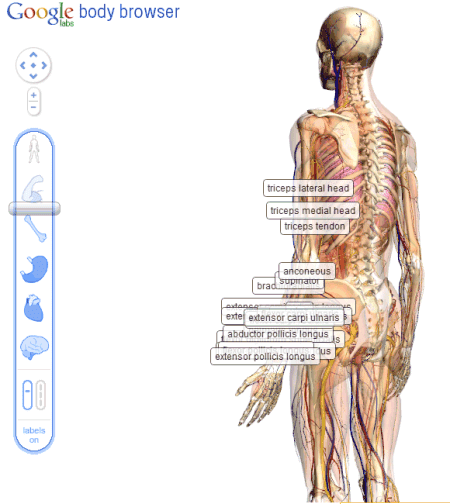
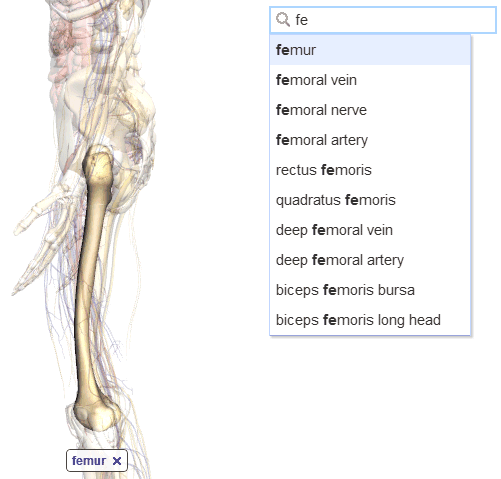
Damon Hernandez was surprised to notice that the application doesn’t require a plugin. “Unlike other web based medical applications I have seen, no Flash, Java, or other plugins are needed. This application will run on any WebGL supported browser. (…) Last year I got the opportunity to work on an open standards based web3D medical app for learning the bones of the body. After witnessing how that app really helped students learn the bones, I am sold on using web3D for medical education.”
Here’s Google’s demo:
{ Thanks, Juuso. }

Browse for a good cause
Whether it’s bug fixes to the Chromium open source project, dazzling apps and extensions arriving daily in our Web Store, or boundary-pushing Chrome experiments — the Chrome community never fails to inspire us with their awesomeness.
This holiday, we wanted to enable the Chrome community to work together for a good cause. Starting today, we invite you to support five worthy causes by counting and “donating” the tabs you open in Chrome.

Everyone’s total tabs will determine a charitable donation made on behalf of the Chrome community, up to one million dollars. Here’s what your tabs can do:
- 10 tabs = 1 tree planted
- 10 tabs = 1 book published and donated
- 25 tabs = 1 vaccination treatment provided
- 100 tabs = 1 square foot of shelter built
- 200 tabs = 1 person’s clean water for a year
To find out more about this effort and the organizations we’re partnering with, visit google.com/chrome/intl/en/p/cause/.
Want to participate?
- Get the Chrome for a Cause extension
- Browse the web with Chrome between December 15 – 19
- At the end of each day, you’ll be prompted to click on the extension to submit your tabs
- Choose which charity you’d like to support with that day’s tabs — you can always support the same charity, or pick a different one each day
Next week, we’ll be sharing the details of the good deeds you’ve enacted. In the meantime, browse away!
Posted by Sarah Nahm, Product Marketing Manager


Chronic pain hits 10% of Canadians under 44
Back pain, migraines and other chronic pain hinder about one in 10 Canadians aged 12 to 44, Statistics Canada says.