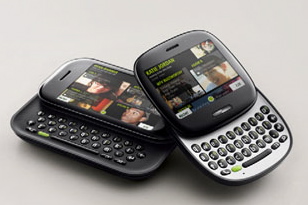
Two months after launch, Microsoft is killing Kin ‘social phone’

By Tim Conneally, Betanews

Microsoft and Sharp's KIN, new Windows Phone

Over this past weekend, Verizon slashed the price of Microsoft’s two Kin phones by 50% to $49 and $29 respectively. Today CNET’s Ina Fried got the word from Microsoft that it is halting further development on the phone line to focus on Windows Phone 7.

The two devices, which were launched a little over two months ago, were marketed to younger users and specialized in social networking and location-based media.

Though the devices were visually attractive and included some noteworthy features, there were significant shortcomings to the platform which immediately became evident. For example, Verizon subscribers had to pay for the same data plan as an advanced smartphone subscriber would, but users did not have the same advanced features, like the ability to download and install apps, or synchronize calendars.

The phones will also not be released in Europe as originally planned, and the team heading Kin development will be folded into the Windows Phone 7 team.

We’ve contacted Microsoft for comment.

Copyright Betanews, Inc. 2010


Add to digg
Add to Google
Add to Slashdot
Add to Twitter
Add to del.icio.us
Add to Facebook
Add to Technorati


MicrosoftVerizonIna FriedSmartphoneWindows Phone 7

Droid X ad pokes fun at iPhone 4 antenna troubles

The world of corporate cheap shots has today been enriched in its number with one supersized ad for one supersized phone. BGR reports that Motorola took out a full-page spread in the New York Times on this final day of June, which was ostensibly dedicated to promoting the positives of its mighty Droid X. But Moto has also followed in the footsteps of Nokia in making a not so subtle jab at the latest king of the smartphone realm. According to the ad, one of the most important things about the Droid X is that:

“It comes with a double antenna design. The kind that allows you to hold the phone any way you like and use it just about anywhere to make crystal clear calls.”

Glad we got that established — next Moto will be telling us the alarm clock on its phones works just fine too. Skip past the break for the untrimmed ad.

Continue reading Droid X ad pokes fun at iPhone 4 antenna troubles

Droid X ad pokes fun at iPhone 4 antenna troubles originally appeared on Engadget on Wed, 30 Jun 2010 17:31:00 EDT. Please see our terms for use of feeds.

Permalink   |  sourceBoy Genius Report  | Email this | Comments

MeeGo for Handsets ‘Day 1’ version released, UI and basic apps revealed

By Tim Conneally, Betanews

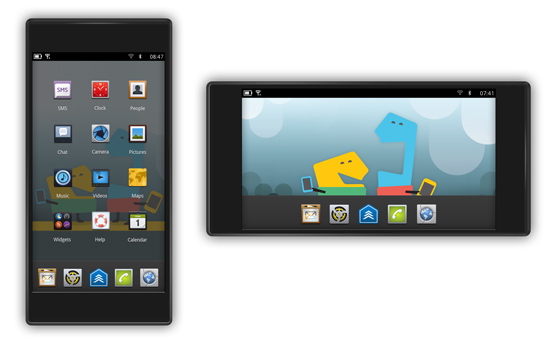
MeeGo for handsets version 1.0
Two major Linux-based mobile operating system efforts, Nokia’s Maemo and Intel’s Moblin were combined earlier this year into a new project going by the name of MeeGo which will ultimately support a wide range of mobile devices, including smartphones, tablets, notebooks, set top boxes, and more.

In March, the core MeeGo distribution infrastructure and OS base were made available to developers so the two code bases, teams, and projects could be combined into a single Linux distribution. MeeGo version 1.0 for Netbooks was released in May, and today, the baseline source code of MeeGo for handsets has been released as a developer preview.

This version includes the Core OS and middleware components, all the MeeGo APIs, incorporating Qt and MeeGo Touch UI Framework; a reference UI (home screen, lock screen, status bar, application launcher, virtual keyboard) and basic applications (Dialer, SMS, Contacts, Fennec Browser, Photo Viewer.)

The official “first version” will be called MeeGo Handset 1.1 and is expected to come in October. To check out this “day one” release, the images can be downloaded from MeeGo’s Day1 site.

Copyright Betanews, Inc. 2010


Add to digg
Add to Google
Add to Slashdot
Add to Twitter
Add to del.icio.us
Add to Facebook
Add to Technorati


NokiaOperating systemLinuxMoblinMaemo

YouTube says it will stick with Flash despite HTML5 video

By Ed Oswald, Betanews

Adobe’s dominant Flash video technologies are seeing their first legitimate challenge from HTML5 and its video tag, but don’t expect YouTube to be joining the ranks of video sites making the transition to the standards based media format any time soon.

The popular social video site said that HTML5 video does not yet meet all of its needs, although it called the format “a big step forward for open standards.” Parent company Google just last month launched its own open source video codec WebM, a possible candidate for the final video standard.

At the moment, there is a split in support for a standard codec. Safari and IE 9 Beta support H.264, while Firefox and Opera support WebM — Google’s Chrome is the only browser to support both. This lack of an agreement is part of the reason why YouTube thinks HTML5 has a way to go yet before it can be considered a serious contender.

YouTube has offered an experimental version of its site since January that does show videos for HTML5-ready browsers, namely Chrome and Safari at the moment, and streams those videos using H.264.

Codec confusion is not the only reason for not pushing ahead with HTML5.

Software engineer John Harding said that streaming issues are another reason, as HTML5 video is delivered over HTTP. This presents a problem in searching through a video: obviously with HTTP the whole video to that point needs to be downloaded in order to view the selected point. Content protection is another issue. With no method available for HTML5, it would make offering products such as the recently-launched YouTube Rentals impossible.

“We’re very happy to see such active and enthusiastic discussion about evolving web standards – YouTube is dependent on browser enhancement in order for us to improve the video experience for our users,” Harding said, but adding the caveat that “Adobe Flash provides the best platform for YouTube’s video distribution requirements.”

One has to wonder if Adobe and Google are tighter than what may immediately be obvious, however. Adobe has thrown its support behind WebM, promising to include the technology in a future version of Flash Player. Google is also doing its part: it has opened the doors to its Android mobile operating system to Flash, something Apple will likely never do.

With the strained relationship between Apple and these two companies, YouTube’s defense of Flash may be more than just a discussion on the merits of HTML5.

Copyright Betanews, Inc. 2010


Add to digg
Add to Google
Add to Slashdot
Add to Twitter
Add to del.icio.us
Add to Facebook
Add to Technorati


YouTubeGoogleAdobe FlashAppleAdobe System

Kinect detailed in newly precise tech specs

Sure, you know Kinect, but do you know Kinect? While retailers have backed off publishing $150 pricetags for Kinect in bizarre displays of solidarity, UK shop Play.com has up some new specifics on the technology in its listing for the device. Here are a few of the standouts that were news to us:

  • Field of view is relatively limited, something we could sense when spending time with Kinect at E3. The unit sees 57 degrees of horizontal and 43 degrees of vertical, with a 27 degree physical tilt to keep you in the action.
  • Depth of view is similarly strict, ranging from 4 feet to 11.5 feet.
  • Skeletal tracking is limited to two active players at a time, as we knew, but the system can at least keep its eye on up to six people at once — like that totally optional pair of backup dancers in Dance Central.
  • Resolution, because we know you were wondering, is detailed as well: 320 x 240, 16-bit at 30 fps (we’re guessing this is the depth camera), 640 x 480, 32-bit color at 30 fps (yeah, this is the color one), and 16-bit audio at 16 kHz.

No huge surprises, and we’re sure a few more details will leak out before launch — can’t you just wait to get “off the couch, on your feet and in the fun”?

Kinect detailed in newly precise tech specs originally appeared on Engadget on Wed, 30 Jun 2010 10:18:00 EDT. Please see our terms for use of feeds.

Permalink Engadget Spanish  |  sourcePlay.com  | Email this | Comments

Hulu Plus coming to Xbox 360


We are happy to announce that Hulu will be coming to Xbox LIVE as part of their Hulu Plus experience. In the announcement today, Hulu announced a preview of their Plus service, along with a series of partners of which Xbox LIVE is one of them. We’re working hard on creating customized experience for Xbox LIVE members, which means that Hulu Plus will be coming to Xbox 360 in early 2011. We are taking the time to ensure that the Hulu Plus experience for Xbox 360 is the best on TV and like our other entertainment experiences it will not be a port, but rather a custom experience that leverages the Xbox LIVE community features.


Hulu Plus will be available for US Xbox LIVE Gold Members only.


Six-Year-Old Boy Uses Nintendo DS to Regain Eyesight

photo of ben michaels with nintendo dsEver since the age of four, Ben Michaels has suffered from amblyopia, or severe lazy eye syndrome, in his right eye. The condition gradually weakened the eye’s vision, and when Ben was at the tender age of six, was at risk of permanent blindness. Desperate, Ben’s mother Maxine sought the advice of Ken Nischal, a consultant at Great Ormond Street Children’s Hospital. Nischal’s professional recommendation? A steady diet of Nintendo DS.

Following the consultant’s strange advice, Ben’s mom “forced” her son to spend two hours a day playing ‘Mario Kart,’ and made sure that he did so while wearing an eyepatch over his left (and healthy) eye, in order to better train his right. Traditional medicine it’s not, but, according to Maxine, her son’s vision “improved 250-percent” in just the first week of heavy gaming. “When he started, he could not identify our faces with his weak eye,” she told the Daily Mail. “Now he can read with it although he is still a way off where he ought to be.”

Continue reading Six-Year-Old Boy Uses Nintendo DS to Regain Eyesight

Filed under: ,

Six-Year-Old Boy Uses Nintendo DS to Regain Eyesight originally appeared on Switched on Mon, 28 Jun 2010 15:05:00 EST. Please see our terms for use of feeds.

Read | Permalink | Email this | Comments

BP spill costs rise to $2.7B

BP has increased the amount it says it’s spent on the Gulf of Mexico oil spill to $2.65 billion US since the Deepwater Horizon rig exploded on April 20.

Men Can Try the ‘Menstruation Machine’ to Feel ‘Bleeding Down There’

menstruation machine

Ah, menstruation. That wonderfully cyclical occurrence that women always discuss with knowing nods, and that men do their best to not think about. But thanks to designer Hiromi Ozaki, formerly clueless guys can now experience the menstrual experience first hand, in all its splendor. Cheers all around.

Ozaki, you see, has designed something called the ‘Menstruation Machine,’ which consists of a device that dispenses blood and simulates lower abdomen cramping — all in an attempt, as Ozaki explains, to mimic “the pain and bleeding of an average five-day menstruation process of a human.” Ozaki even created a demo/music video (after the jump) about a guy named Takashi, who uses the machine in an effort “to fulfill his desire to understand what it might feel like to be a truely kawaii (cute) girl [sic].” Takashi manages to stick with it for a while, and then things get pretty ugly. So, what did Takashi learn about being a woman? We’re not really sure. But it definitely looks like he won’t need to buy a Childbirth Machine for at least nine months. [From: DesignInteractions, via: Wired]

Continue reading Men Can Try the ‘Menstruation Machine’ to Feel ‘Bleeding Down There’

Filed under:

Men Can Try the ‘Menstruation Machine’ to Feel ‘Bleeding Down There’ originally appeared on Switched on Mon, 28 Jun 2010 14:30:00 EST. Please see our terms for use of feeds.

Read | Permalink | Email this | Comments