Search results for: “ships”

  • ASUS prices 10-inch Android Eee Pad under $399, 8-inch Eee Tablet at $300, other tablets too

    ASUS just dumped Windows Embedded Compact 7 for Android for its lower-end tablet devices, and CEO Jerry Shen is passing along the savings. He’s pledging that the 10-inch Eee Pad EP101TC, due to ship in March, will cost under $399 — and if the Notion Ink Adam is any indication that means it’ll be $398. Then there’s the EP121, a 12-inch tablet running Windows 7 that’s positioned rather higher up in the market, as indicated by its $1,000 price tag. Shen says this high cost is due to that docking station able to intriguingly transform it into a laptop when it ships around December or January. Next is yet another Eee Pad due around January, one that will run Windows Embedded Compact 7 on a 10-inch screen and at a price somewhere south of $499. Finally, there’s the grayscale Eee Tablet e-reader thing, formerly rumored to be under $599 but now priced at a solid $300 and, supposedly, shipping in October. Surely we’re mere months away from tablet saturation at this point.

    ASUS prices 10-inch Android Eee Pad under $399, 8-inch Eee Tablet at $300, other tablets too originally appeared on Engadget on Fri, 13 Aug 2010 07:47:00 EDT. Please see our terms for use of feeds.

    Permalink   |  sourcePC World (1), (2)  | Email this | Comments

  • Toshiba’s dual-screen Libretto W100 hits Japan next week

    Toshiba's dual-screened Libretto W100 ships next week

    It’s no Courier, but Toshiba’s dual-screened Libretto W100 is about as good as we’re going to get and, if you’re in Japan, the getting is about to get good. The key-free lappy is due to start shipping there on August 11, which means you’re just a few days (and, possibly, a few very long flights) away from getting your fingerprints all over one. If, however, you’re not so much into the importing scene, you’re going to have to wait a bit longer for this $1,100 curiosity to hit US shores through normal retail channels. How much longer? Toshiba promised a summer release, and let’s just say that the days aren’t getting any longer.

    Toshiba’s dual-screen Libretto W100 hits Japan next week originally appeared on Engadget on Fri, 06 Aug 2010 11:37:00 EDT. Please see our terms for use of feeds.

    Permalink Netbooknews  |  sourceToshiba  | Email this | Comments

  • N. Korea rally heightens tensions

    About 100,000 people gathered in the North Korean capital Pyongyang on Sunday to denounce South Korea and the U.S., heightening tensions over the sinking of one of the South’s warships.

  • 12 reasons why I won’t buy an Apple iPad

    By Joe Wilcox, Betanews

    Yesterday, I asked Betanews readers if they would buy and Apple iPad. You responded with a resounding, “No!” I won’t buy one either, and I’ve got 12 reasons why. I couldn’t limit the list to the usual 10. I’ve got a dozen.

    For me, there’s relief in yesterday’s iPad announcement. After nearly a month of insanity — with geekdom acting like Jesus was coming on the clouds to set up his heavenly kingdom — the aura is fading. Apple’s tablet didn’t live up to the hype or the lofty “it will change the world” expectations so many people attached to it. Some pundits called Apple’s smartphone the Jesus phone. I don’t expect that many will assign such aspirations to iPad, which isn’t the slightest bit category changing.

    I agree with Samuel Axon, who writes at Mashable: “The iPad isn’t going to be a phenomenon with either netbook users or power users. It’s not better than existing devices at anything, and it’s too expensive for most people to use it as a secondary device.” My prediction: Apple’s tablet will be Jack of trades and master of none.

    With that, I present my dozen reasons for not buying iPad, despite the allure of its pretty user interface. Perhaps as some Betanews readers asserted, iPad will be a version 3 success. That product is years away. Now to my reasons:

    1. The iPad isn’t good enough to replace smartphone or laptop. Apple’s tablet offers too much functionality that overlaps the smartphone below and laptop above. The overlap makes the $499 to $829 price hard to justify. The iPhone 3GS, many Android smartphones (like the Nexus One) and Nokia N Series handsets offer most of the important, similar capabilities, with benefit of persistent data connection. The smartphone is a device always and easily carried, while the iPad is too big for the pocket.

    A Windows laptop would offer way more functionality — and for about the same price, or even less, than iPad. Sure, iPad costs less than a Macbook or MacBook Pro, but those laptops run a real desktop operating system, while iPad packs iPhone OS. From that perspective compared to Windows laptops, iPad costs even more for much less.

    More importantly — and this should have been a separate point — there’s no multitasking. My smartphone and laptop allow background applications to run. From that perspective, iPad is functionally inferior to the two other devices.

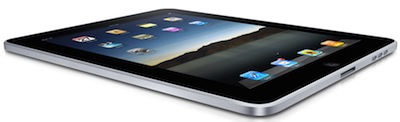
    iPad slanted2. Persistant data connection costs too much. The cheapo, 16GB model sells for $499 with 802.11n wireless. For 3G, buyers must pony up between $629 and $829 plus another $30/month to AT&T for data service. Well, there's a 15-buck plan for 250MB of data. Amazon's Kindle and Barnes and Noble Nook ebook readers come with free 3G service. Sure, iPad does so much more, but the user not only pays about twice as much for the device but $15 or $30 month, instead of nothing. The bigger question: Why pay for two 3G services — smartphone and iPad? My answer is none.

    3. Web experience is inferior to other devices in its size class: Apple’s promotional Website claims that iPad is “the best way to experience the Web.” But the device doesn’t support Adobe Flash, for starters, and that means the experience is no better than iPhone or iPod touch and less than comparably sized PC slates or netbooks running desktop or desktop-class browsers. Hell, my smaller Nokia N900 smartphone, with 800 x 480 screen resolution, packs a full Mozilla browser that runs Flash.

    4. Screen resolution is inadequate: iPad’s native screen resolution is only 1028 x 768. That’s simply too little for the size and price, particularly when many PC slates, netbooks or laptops offer higher screen resolution for about the same price. Pixel density is 132 per inch. By comparison, my N900 is 267 pixels per inch — granted with only 800 x 400 display. But iPad ships with a LED display, for which I want more ppi, not less.

    5. Aspect ratio is 4:3 in a 16:9 world. Widescreen everything is today’s video consumption standard. But iPad’s aspect ratio takes you back to the last decade. My smartphone not only displays video in 16:9 ratio, it shoots photos that way, too.

    6. It’s nothing more — and some things less — than a big iPhone (without cellular voice) or iPod touch. Like its small siblings, iPad runs iPhone OS, accesses iTunes Store and built-in App Store, displays photos, plays movies and music, etc., etc., etc. OK, so there is iWork and bigger screen. I’m not pining for the differences.

    7. There’s no camera. But there should be two, one pointing outwards for taking photos and supporting applications and another inward facing for video conferencing. Camera is one of the greatest utilities on most portable devices, whether cell phones, laptops or even netbooks. Camera already is important on cell phones for using third-party services like Amazon product search, barcode search and location informational services.

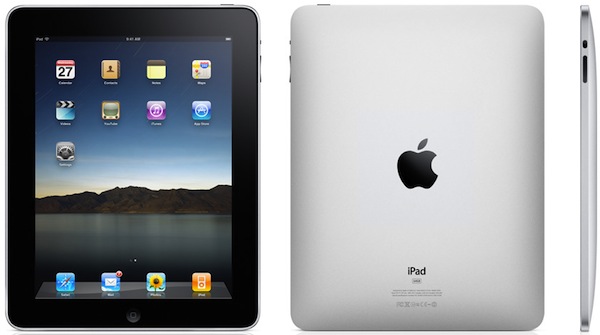
    iPad front-back

    8. Connectivity options are limited without paying more money. In the Apple world of giving users less they pay more to get what they need. The iPad uses the same connector as iPhone or iPod touch, and Apple ships the same USB cable as comes with the smaller devices. There’s no HDMI port or any other useful one. It’s either pay Apple more for the connectors — gasp, even for a digital camera — or make do with wireless options, which should be good enough for printing but not connecting to projectors or TVs.

    9. Accessories tell the real story — iPad isn’t good enough at any of its price points. Reiterating #8, iPad demos well as a slick tablet, but to use many of its features users will need to pay more to Apple for accessories, like the aforementioned camera connectors (there are two) and the keyboard dock. During yesterday’s iPad launch event, Apple CEO Steve Jobs emphasized the ease of using the virtual keyboard like a real one. But writing for Gizmodo, John Herrman asserts: “The iPad’s onscreen typing solution Isn’t a solution at all.” The thumbs are important for typing on smartphones, but iPad’s virtual keyboard needs to be more touch-type ready. Hermann writes: “Seriously, this thing’s got its own version of iWork — you’re supposed to type on it. That explains the giant hardware keyboard attachment, I guess!”

    10. The iPad requires a Mac or PC. That USB connector comes with iPad for a reason. The tablet would make more sense as a standalone device connecting to cloud services. In #1, I dinged iPad for not being a smartphone or laptop replacement. Sadly, that’s by design.

    11. There’s no GPS on three models — not without 3G radio. No-3G limits the device’s mapping capabilities and its ability to spatially orientate for using augmented reality applications. The accelerometer and compass are OK — as they are on iPod touch — but 3G makes a big difference when also orienting location. GPS is available on three 3G iPad models, but buyers will pay more for the device and for monthly data service fees.

    12. It’s a closed system. Actually it’s a step backwards. Apple has brought back the onerous developer non-disclosure agreement. Apple had lifted NDAs for App Store, but they’re b-a-a-a-ck! At a time when Google and Nokia are pushing open-source operating systems and mobile applications stacks, Apple’s approach ranks of last-century software development practices. We’ve been there with Microsoft. Must we trade Microsoft closed for Apple closed? Something else: Everything is tied to iTunes Store, which is as closed as Apple is secretive about new products.

    Copyright Betanews, Inc. 2010


    Add to digg
    Add to Google
    Add to Slashdot
    Add to Twitter
    Add to del.icio.us
    Add to Facebook
    Add to Technorati


  • Canada’s juniors come back to beat U.S. in shootout

    Brandon Kozun scored the winner in the third round of the shootout to lead Canada to a 5-4 comeback victory over the United States at the world junior hockey championships in Saskatoon on New Year’s Eve.

  • The Lifehacker Guide to 64-bit vs. 32-bit Operating Systems [Windows]

    You’re probably aware that 64-bit and 32-bit versions of your operating system exist, but apart from ascribing to a bigger-is-better philosophy, you may have no idea what separates the two. The question: Should you use a 64-bit version of Windows, and why?

    More and more frequently, users are installing the 64-bit version of their operating system of choice over the less capable 32-bit version. But most people don’t really have a full understanding of what the difference really is. Below, we’re taking a look at the most important differences so you can better understand what you gain (and potentially lose) if you upgrade to the 64-bit version of your OS. (The post focuses on Windows.)

    We’ve already explained whether you really need 4 GB of RAM, a question that touches on the 64-bit issue, but now let’s tackle it in more detail.

    Which Version Do I Have?

    To figure out which version of Windows you are running, just head into the System properties in Control Panel, or you can take the easy route and right-click on your Computer icon in the start menu or desktop, and choose Properties from the menu. Windows 7 or Vista users will be able to check the System type in the list, while the few XP users with 64-bit will see it on the dialog.

    Keep in mind that your CPU must support 64-bit in order to be running a 64-bit operating system—if you're running a modern CPU you should be fine, but some of the budget PCs don't include a 64-bit processor.

    Does 32-bit Really Have a Memory Limit?

    In any 32-bit operating system, you are limited to 4096 MB of RAM simply because the size of a 32-bit value will not allow any more. On a 32-bit system, each process is given 4 GB of virtual memory to play with, which is separated into 2 GB of user space that the application can actually use at a time.

    Savvy readers might point out that modern chips support PAE, a processor technology that allows the operating system to use a little bit more memory—up to 64 GB, but it also requires special application support that most applications don't have or necessarily need.

    A common misconception is that this is a Windows-specific problem, when in fact 32-bit Linux and Mac OS X have the same limitations and the same workarounds. 32-bit Linux uses a mapping table to allow access to the extra memory, and OS X Snow Leopard actually ships by default with a 32-bit kernel that can’t access all the memory on older systems, even though most of the rest of the OS runs 64-bit processes.

    The 4 GB limit for Windows, at least, is also a factor of licensing—the home versions of 32-bit Windows, while technically being able to support PAE, have a hard limit of 4 GB for licensing and driver compatibility reasons.

    More Problems with 32-Bit

    Not only does 32-bit have a hard limit for the amount of memory it can address, there’s also another problem: your devices, like your video card and motherboard BIOS take up room in that same 4 GB space, which means the underlying operating system gets access to even less of your RAM.

    Windows expert Mark Russinovich found that a desktop running 32-bit Windows with 4 GB of RAM and two 1 GB video cards only had 2.2 GB of RAM available for the operating system—so the bigger and better your video cards get, the less of that 4 GB will be accessible on a 32-bit system.

    What’s Different About 64-Bit?

    While 32 bits of information can only access 4 GB of RAM, a 64-bit machine can access 17.2 BILLION gigabytes of system memory, banishing any limits far into the future. This also means that your video cards and other devices will not be stealing usable memory space from the operating system. Windows 64-bit Home editions are still limited to 16 GB of RAM for licensing reasons, but the Professional and Ultimate versions can use up to 192 GB of RAM, so keep that in mind when building that killer system.

    The per-process limit is also greatly increased—on 64-bit Windows, instead of a 2 GB limit, each application has access to 8 TB of virtual memory without any special API, a huge factor when you consider applications like video editing or virtual machines that may need to use enormous amounts of RAM.

    On Windows, the 64-bit versions also come with a technology to prevent hijacking the kernel, support for hardware-enabled data execution protection, and mandatory digitally signed 64-bit device drivers. You also won’t be able to use your 16-bit apps anymore, which hardly seems like a loss.

    Do 32-bit Applications Work on 64-Bit?

    The vast majority of your 32-bit applications will continue to work just fine on 64-bit Windows, which includes a compatibility layer called WoW64, which actually switches the processor back and forth between 32-bit and 64-bit modes depending on which thread needs to execute—making 32-bit software run smoothly even in the 64-bit environment.

    There are some exceptions to that rule, however: 32-bit device drivers and low-level system applications like Antivirus, shell extensions that plug into Windows, and some media applications simply won’t work without a 64-bit equivalent.

    In practice, the vast majority of your favorite applications will either continue to work, or provide a 64-bit version you can use instead—but you should check to make sure.

    Does 64-Bit Use Double the RAM?

    A common misconception about 64-bit Windows is the amount of RAM that is actually used—some people seem to think it will use double the RAM, while others incorrectly assume a 64-bit system will be twice as fast as 32-bit.

    While it's true that 64-bit processes will take a little extra memory, that is a result of the memory pointers being a little bigger to address the larger amount of RAM, and not an actual double in size. Imagine, if you will, an ancient library filing system that has a card to tell you where to find the book in the library—if you got a bigger box to hold the cards, the library would not double in size, you'd just be able to find the book you were looking for more easily.

    What will increase with 64-bit Windows is the amount of drive space needed for the operating system—with a compatibility layer in place, the base OS will take up a few extra GBs of space, though with today's massive hard drives that should hardly be a concern.

    The Bottom Line, Which Should I Use?

    If you are ordering a new PC with 4 GB or more of RAM, you should probably be running a 64-bit version of Windows so you can use all of the available memory, especially if you want a rig with a large video card—just keep in mind that the Home versions only support 16 GB of RAM (for most people a 16GB limit won't be a problem, but it's worth keeping in mind).

    If you’re running Mac OS X, you don’t need to worry about 32-bit vs 64-bit, and if you’re running Linux, you probably know this stuff already.


    What about you? Have you made the switch to a 64-bit operating system? Let’s hear what you’re using, and how long you’ve been living the 64-bit life, in the comments.

    The How-To Geek has banished 32-bit operating systems entirely from his house. His geeky articles can be found daily here on Lifehacker, How-To Geek, and Twitter.


  • Google halts development of Gears, makes room for HTML 5

    Well, we’ve known for a while that Google was throwing considerable weight behind HTML 5, and that one of the purposes of the markup language is to do away with plug-ins for Internet apps, so it makes sense that eventually Gears would go the way of the Dodo. But so soon? Linus Upson, the man in charge of both the Chrome browser and Chrome OS engineering teams, has announced that the company is done developing the software. “We are not driving forward in any meaningful way [on Gears],” the man said in an interview with PC Magazine. “We are continuing to maintain it, so that applications will continue to work; we don’t want to break anything out there.” If you listen to this guy, it sounds like this was the plan, all along: “When we started the Gears project, three years ago… we did it because we couldn’t get the browser vendors interested in building offline applications.” He then details the mind trick: Google ships Gears, and suddenly browser vendors are “very interested in adding capabilities to build offline applications,” paving the way for the capabilities in the next version of HTML. Clever, Google. In the same interview, Upson stated the company’s plans to move all its apps to standards-based HTML 5 APIs. Now that it’s convinced the world that it wants — nay, needs — rich Internet applications, we hope that the company will promise to use its powers of persuasion for good, and not for evil.

    Google halts development of Gears, makes room for HTML 5 originally appeared on Engadget on Tue, 01 Dec 2009 22:57:00 EST. Please see our terms for use of feeds.

    Permalink   |  sourcePC Magazine  | Email this | Comments

  • Brain Scan Finds Man Was Not in a Coma—23 Years Later [Neuroscience]

    Rom Houben has been trapped in a series of worst nightmares, including trying for 23 years to alert those around him that he was not in a coma. A new report suggests he’s not alone in his experience.

    In 1983, Belgian engineering student and martial arts enthusiast Houben, then 20, was in a car accident that was thought to have left him in a vegetative state. Doctors relied on the widely-used Glasgow Coma Scale, assessing his eyes, verbal, and motor responses. What they failed to notice was that Houben was actually conscious—but completely paralyzed.

    “I screamed, but there was no one to hear,” he says in an interview with the German magazine Der Spiegel. Three years ago, neurologist Steven Laureys used modern scanning techniques to discover that Houben’s cerebral cortex was, in fact, functioning. (The doctor has only just now made Houben’s story public.)

    Houben, who communicates via a computer with a special keyboard activated with the slightest movement of his right hand, is now 46. He has spent more than half his life trapped in his own body, and says he only survived this excruciating existence by dreaming himself away. In the interview, this is what he typed:

    I am called Rom. I am not dead. The nurses came, they patted me, they sometimes took my hand, and I heard them say "no hope." I meditated, I dreamed my life away—it was all I could do. I don't want to blame anyone—it wouldn't do any good. But I owe my life to my family. Everyone else gave up.

    I studied what happened around me as if it were a tiny piece of world drama, the bizarre peculiarities of the other patients in the common room, the entry of the doctors into my room, the gossip of the nurses who were not embarrassed to speak about their boyfriends in front of “the extinct one.” That made me an expert on relationships.

    According to Laureys, Houben’s case may be far more common than we’d like to think. The doctor, who leads the Coma Science Group and Department of Neurology at Liege University Hospital, says that while Houben’s doctors were “not good,” he’s not sure better ones using this same coma scale would have detected brain activity either:

    In Germany alone each year some 100,000 people suffer from severe traumatic brain injury. About 20,000 are followed by a coma of three weeks or longer. Some of them die, others regain health. But an estimated 3,000 to 5,000 people a year remain trapped in an intermediate stage—they go on living without ever coming back again.

    In his paper, Laureys writes that in about 40 percent of “vegetative state” cases he has analyzed, current brain scanning techniques reveal signs of varying levels of consciousness. A case is being made, it seems, to stop relying on the Glasgow Coma Scale and start looking more closely at brain scanning images.


  • How To: Make Windows 7 Play Nice With All Your Gadgets [How To]

    Generally speaking, upgrading to Windows 7 is a no-brainer. “But what about my gadgets?” you might ask, eyes watering slightly, “will they be OK?” Yes, yes they will. Here’s how to make Windows 7 play nice with all your favorite toys.

    Your Phone

    Windows Mobile: To sync with your Windows Mobile phone in Windows 7, you're going to need Windows Mobile Device Center 6.1. Just like in Vista! Except this time around, Windows is savvy enough to autoinstall the suite, which saves a little time and potentially a lot of Googling. (Just give it a minute after you plug in your device via USB—if nothing happens, go here.

    This will take care of calendar, contact and media syncing for the most part, though a lot of newer Windows Mobile phones depend on microSD storage for music and movies. For this, you simply mount the disk as a folder, and drag and drop.

    iPhone: As always, this is a job for iTunes. However, Windows 7 is compatible with doubleTwist, an alternative media manager that doesn't just sync with your iPhone—it works with almost anything else, too.

    Speaking of which, Android: Android generally isn’t a “syncing” kind of OS, intended instead to be kept up to date by tapping into Google’s services over the internet. That said, doubleTwist will work for music syncing with most Android phones, and HTC Sync will keep their phones, like the G1, MyTouch and Hero, in sync with your Outlook Address book, contacts and calendar.

    BlackBerry: BlackBerry Desktop Manager and Media Sync still reign supreme, for contacts, apps, media and software upgrades.

    Palm Pre/Pixi: doubleTwist, again, at least until Palm fully withdraws from their silly slapfight with Apple over iTunes and makes their own client.

    Your Zune, iPod, or other PMP

    Zune: Zune’s software plays nice with Windows 7, but it’s you only choice. And even moreso than Apple products, the Zune HD is locked to its client software, meaning there aren’t any alternative for the time being. Luckily, Zune 4.x is fantastic software—it's just a shame it's not optional, and that it doesn't work with other devices.

    iPod: As with the iPhone, you’re more or less stuck with iTunes or an app like doubleTwist for music and movie syncing, but that’s not so bad: iTunes in Windows 7 comes with some nice enhancements, including jump list shortcuts that can quickly take you to the iTunes Store, and hoverable controls, which give you quick access to skip, play and pause functions. In some ways, iTunes is actually better on Windows 7 than it is on OS X. [via]

    Other PMPs: PMPs that rely on raw mass storage never took an advanced degree to use, so it's interesting to see that they've gotten a little simpler in Windows 7. The "Devices and Printers" system in Windows 7 can claim a few advantages over its predecessors, with much better icons—you generally get an reasonable approximation of whatever you've plugged in on the devices screen—customized Device Stage interfaces, seen left, and something called Device Containers, which group components of the same device into one icon. Like, if your 3rd-party PMP has internal and expandable storage, Windows won't just act as if there are two different devices attached; it'll group them together. Just click them to expand.

    And if you third-party PMP does have a syncing app, be wary. Many of them, especially for older players, won’t have been update for Windows 7. Install them in a compatibility mode for XP or Vista—whichever they're most compatible with—to avoid any potential problems. [pic via]

    Your Camera: Camera support is pretty great in Windows 7 so you’ll often be able to just plug your camera in and go. As with PMPs, printers and the like, cameras with multiple storage devices will be lumped into the same icon in Device Stage, which will also (hopefully) display other device info, like remaining battery, photo import options and alternative sync apps.
    Windows also puts quick shortcuts in the taskbar for supported cameras.
    Unfortunately, Windows 7 doesn’t add anything in the way of RAW support, so you’re going to have to go 3rd-party for that. FastPicture’s codec pack supports most of the popular RAW formats used in DSLRs from Nikon, Canon, Sony and the like, and it’s perfectly compatible with Windows 7. And free!

    Your Displays

    Adding a second monitor to Windows has never been particularly complicated, but the methods have never been all that apparent, either. Along with a refreshed multi-monitor displays settings interface, Windows 7 adds a fantastic shortcut: Windows+P will bring up a monitor management widget, which lets you set your monitor to either off, display duplicate or display extend.

    The shortcut also works for enabling a projector. Laptop manufacturers have been adding functionality like this with their own software for years, so it's good to see Microsoft taking their ideas onboard in 7—it's easier for everyone that way.

    Windows 7 also ships with a monitor calibration tool—again, something that had to be previously furnished by third-party software or monitor manufacturers. It helps you adjust brightness, contrast, gamma and color settings with a simple wizard, accessible by navigating to the Display panel in Appearance and Personalization in the Control Panel

    Your Other Computers

    These are the gadgets your Windows 7 PC has to play nicely with—your other computers. Windows 7 file sharing has gain some new features, but just as many quirks.

    Windows 7 PCs: Since most people just want to share some files and get networking setup over with, Windows 7 includes a feature called Homegroups, which lets you share files and media between Windows 7 PCs with almost not setup at all. Think of it as the old network setup wizard from XP and Vista, except much, much simpler. To create a Homegroup, you need to have a version of Windows 7 that’s better, or, er, more expensive than Starter or Home Basic—those two can connect to Homegroups, but they can't initiate one.

    To create one, just navigate to “Network and Internet” in the Control Panel, or search “Homegroups” in the Control Panel search bar. At the “Share with other computers running Windows 7 page, select “Create a Homegroup,” and designate the types of media you’d like to share. Joining a Homegroup in Windows 7 from Windows 7 should be easy: as soon as you connect to a network with available Homegroups, Windows will prompt you to join. Just enter the passkey generated during the Homegroup creation process.

    Windows XP and Vista: Homegroups are nice and new and WOW and all, and they don’t work directly, as Homegroups, with Windows XP and Vista. Thing is, under all the fresh trappings, Homegroups are the same old Windows networking protocols. Accordingly, XP and Vista can still access Windows 7 PCs, just not under the official “Homegroups” guise. So, first: Set up a user account for your client PCs to log in to:

    Click the Start button, type “user accounts” in the search box, and then click User Accounts and Family Safety.
    Click Add or remove user accounts, and then click Create a new account.

    Type a name for the new account, such as “share.”

    Click Standard user, and then click Create Account.

    Click the tile for the user account you just created, and then click Create a password.

    Log on as the user you created (for example, share), and then log off. (This is required so that the user account is created with the correct credentials.)

    Now that you've got the account set up, connecting should be easy: On Vista, just click Start, then Network, then open the computer you want to access—it should be listed by default. Enter the user name and password you've just created, and you're there. For XP, the process is similar: Just go to My Network Places, the click View Workgroup Computers, open the computer you want to access and enter your credentials.

    From a Mac, the process isn’t necessarily so straightforward. If you’re lucky, your Windows 7 share will just show up in your Finder sidebar, where you can click on it and enter login info when prompted. (Windows 7 still uses basic SMB shares, which OS X is more than equipped to access.) If it doesn’t show up, the process is a little more complicated. Deferring again to MS:

    In [Finder] the toolbar, click Go, and then click Connect to Server (or use keyboard shortcut Command +K).
    In OS X 10.3.x and later, click Browse, select the computer running Windows 7, and then click Connect. (Or follow the common instructions below.)

    If that doesn't work, click Connect to Server again, and manually enter smb://username@computername/users as the network address, where username is your newly created user account, computername is your Windows 7 machines network name, and users is literally the word users—don't change that. Alternately, you can use the smb://username@ipaddress/users syntax, where ipaddress is your Windows 7 computers local IP. (as in 10.0.0.2, or 192.168.1.102)

    Your Streaming Devices and Consoles

    Play to: Play To was one of the most touted features in Windows 7, and yeah, it’s pretty cool. Here’s a breakdown:

    One of the most potentially groundbreaking features of Windows 7 is “Play To,” the ability to send music, video and photos to any compatible devices on the network, without running any kind of proprietary software, and without any initial setup. Sending a song to a Sonos or a video to an Xbox is-theoretically-just a right-click away.

    The important thing to remember here is that "compatible devices" include—or rather, will include—anything that adheres to the DLNA 1.5 standard, from connected TVs to your Xbox 360 to other Windows 7 PCs with Windows Media Player 12. Play To devices show up automatically once they're connected to your network, it's just just a matter of enabling the functionality in Windows:

    Before using Play To, you will first need to turn on Streaming. To do this, with media player open, click Stream and then click Turn on media streaming. You will then be given some options for sharing media and which devices you wish to allow.

    You can right-click the item that you wish to play and move your cursor to the Play To option and select the device you want to receive that media file.

    That’s it! To allows a Windows 7 PC to receive Play To streaming, just enable Play To in the receiving computers’ Media Streaming options, located in the Network and Sharing Center in the control panel.

    Consoles: As I said before, Play To will stream to the Xbox 360 if it's in Media Extender mode (that is, connected to a Windows Media Center PC). Chances are, though, you're going to just want to stream media from your Windows 7 PC to your Xbox 360, controlled from your Xbox 360. Good news: the same old methods work fine here, so shared files with certain codecs, or anything in your Windows Media Center library, are all fair game, and should work straight away. Likewise, the PS3 will play a limited number of video and audio formats streamed from your PC with virtually no configuration, but the utility is limited—especially if you do a lot of downloading, or archive video in a rare codec or container. For both, the solution is the same: Get TVersity, because it's awesome. Setup isn’t super-easy, but the results are worth it: Pretty much any video you can come up with can be transcoded on the fly to stream on your console. Full instructions are here.

    So that's about it! I've only scratched the surface here—this is like Windows 7 Gadget Mediation 101, or maybe 102—so add you favorite tips and trick in the comments, since your feedback is a huge benefit to our Saturday guides. And if you’re still curious about Windows 7 in general, look no further than our Complete Windows 7 Guide. Have a nice weekend!


  • HP Ranked #1 Green Company (What!?) [Hp]

    Newsweek’s latest Green Rankings gave Hewlett Packard the top position, establishing the firm as the greenest Fortune 500 company this year—a far cry from Greenpeace’s #14 ranking. So what gives?

    The ranking methodology utilized by Greenpeace and Newsweek are radically different; the Newsweek rankings are based on a holistic view of the companies including greenhouse emissions, water consumption and supply chain management. Greenpeace study analyzes more focused benchmarks like the use of toxic chemicals.

    Greenpeace's biggest knock on HP is it's continued polyvinyl chloride (PVC) and brominated flame retardant (BFR) usage despite a commitment to discontinue their utilization, while Newsweek recognizes their continued use— they give HP credit due to progressively diminished usage.

    HP got especially high marks for it’s Green Policy and Performance from Newsweek, issues Greenpeace did not consider. While Newsweek’s ranking system is more comprehensive, there is good reason Greenpeace looks specifically at PVC and BFRs. Dioxin, an organic compound, produced as a byproduct of PVC production has been implicated in a broad range of health problems from acne to sarcoma.

    Both rankings have valid rationales to justify their methodologies, HP most likely belongs somewhere in between #1 and #14. [Newsweek and Greenpeace]

    Thanks Prof. Singaram for helping me work through organic chemistry.


  • Mac fanboys should get a life and some Windows 7 common sense

    By Joe Wilcox, Betanews

    I have to laugh at the sudden, slew of Mac bloggers taking swings at Windows 7 and asserting that Macs will continue to sell well after Microsoft’s newest OS ships. Feeling a little defensive are we, bros? Their reaction shows worry that the thing they profess against — surging PC sales that swamp Macs — may yet be reality.

    Windows 7 is simply Microsoft’s best operating system ever. Mac fanboys should worry and circle together in defensive posture. Collectively, they’re making a last stand against the PC giant. Please, please, boisterous Mac defenders, stand in the front lines and receive the first blows. You deserve them.

    Mac market share actually means little to Microsoft, although it sure matters lots to Mac bloggers thumping for Apple. The little dog barks, but the big dog — with its enormous market share — has the bite. Windows 7 is a new set of teeth. (I’ll explain what competitors really matter to Microsoft after the subhead.)

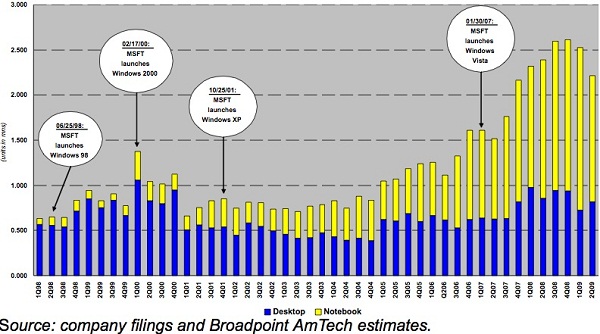
    The Apple fanboy crowd snipes against Windows 7 and stresses the over-importance of all things Mac. Some of the assertions about Macs or Windows 7 sales are laughable, they’re so ridiculous. For example, today, Apple 2.0 blogger Philip Elmer-DeWitt asked: “Will Windows 7 boost Apple sales?” Philip writes that “over the past decade, Mac shipments have grown with nearly every new Microsoft release,” based on research released by Broadpoint AmTech yesterday.

    That’s not what the data shows. The biggest increase in Mac sales follows the release of the much-maligned Windows Vista. The data supports what is widely known: Vista was a Windows failure. As for the other spikes, supposedly associated with Windows releases, Occam’s Razor dictates that something Apple did and not Microsoft affected Mac sales. For example, the chart shows a huge spike in Mac sales for second quarter 2000, noting that Microsoft released Windows 2000 on February 17. But it ignores something else. A day earlier, Apple unveiled new Power Macs, finally reaching the long-delayed 500MHz processing power milestone and setting off a sales surge.

    Another date: Oct. 25, 2001, and the launch of Windows XP. The chart shows level Mac sales for the quarter and a substantial decline for the one following. In July 2001, Apple introduced dual-processor Power Macs, and accordingly there was a two quarter spike in Mac shipments. Philip asks a silly question, and the chart is more reasonably explained by Apple actions, not Microsoft’s.

    BroadPoint AmTech on Macs

    Over at Apple Insider, Neil Hughes continues the Broadpoint AmTech misinformation, also referring to Philip’s post. Several other blogs or news sites also reported on Broadpoint AmTech numbers, some of them yesterday.

    Mac fanboys have also attacked verteran tech reviewer Walt Mossberg’s fairly favorable review of Windows 7. Perhaps they feel betrayed, as Walt has favored Macs for years — and for good reasons in the post-Vista era. But go back a decade and you’ll find Walt to have been less charitable towards Apple.

    Assessing the Real Competition

    Microsoft’s competitive problems aren’t Macs but:

    • Windows XP
    • Software pirates
    • Netbooks

    Windows XP. Windows 7’s biggest competitor will be Windows XP, which runs on about 80 percent of PCs, according to combined analyst reports. Microsoft’s first challenge will be getting XP users to move up to Windows 7. Mac market share was 7.6 percent in the United States in second quarter, according to IDC. (Gartner and IDC should release Q3 preliminary numbers in the next couple of days.)

    Mac share is inconsequential to Microsoft compared to Windows XP. My prediction: Windows 7 will slow Mac share gains, which already declined over the last three quarters, according to both Gartner and IDC.

    Software pirates. Collectively, software pirates pose the greatest competitive threat to Microsoft, next to Windows XP. Not Macs. Certainly not PCs running Linux. According to Business Software Alliance, software piracy rates are highest in emerging markets, which also are where potential Windows PC adoption is greatest: 85 percent in Latin America, 66 percent in Central and Eastern Europe and 61 percent in Asia Pacific. By comparison, piracy rate in North Americs is 21 percent and 35 percent in the European Union. So in Latin America, more than 8 out of 10 copies of software in use are stolen.

    Here’s a loaded question: How many people among the Betanews community use software for which they didn’t pay for, even though the developer charges something? Anyone care to respond in comments? Maybe this is easier: What do you feel you should have to pay for software?

    More significantly, software piracy creates competitive opportunities for Macs, because of the damage done to the Windows brand. In a report released last week, BSA revealed a direct correlation between online software piracy at torrents and other file-trading sites and malware infections. Countries with high online piracy rates also have high malware infection rates. Related, 25 percent of a sampling of 98 sites distributing pirated software or digital content also contained malware. Where does the blame fall when PCs are infected with viruses? On Microsoft and Windows, which tarnishes the brand and helps foster popular folklore that Macs are more secure than Windows. Macs have problems, too, but they’re not always as well publicized.

    Netbooks. Microsoft also faces more competitive threat from netbooks, which are gobbling up Windows margins at an alarming rate. Microsoft makes substantially less on each Windows XP Home license shipping on netbooks than it does on either Windows Vista Home Basic or Premium.

    During second calendar quarter, when Windows Client revenue fell 29 percent year over year and income declined 33 percent, netbooks made up 11 percent of PC sales, according to Microsoft. Microsoft Chief Financial Officer Chris Liddell acknowledged that the increase in lower-margin consumer Windows licenses — fed in part by increasing netbook demand — contributed to declines.

    Last week, DisplaySearch updated second calendar quarter PC shipment data. DisplaySearch concluded that netbooks accounted for 22.2 percent of overall PC sales and 11.7 percent of revenues. Netbook sales jumped a staggering 264 percent year over year, while overall laptop sales (without counting netbooks) declined 14 percent.

    Meanwhile, increased netbook sales exerted ever greater pull downward on average selling prices. Laptop ASPs fell to $688 in second quarter from $704 in first quarter and $849 in Q2 2008. Netbook prices fell to $361 from $371 and $506, respectively, during the same time period. Microsoft has lots more to worry about than Macs, particularly netbook cannibalization of the PC market and the negative impact on Windows margins.

    Copyright Betanews, Inc. 2009


    Add to digg
    Add to Google
    Add to Slashdot
    Add to Twitter
    Add to del.icio.us
    Add to Facebook
    Add to Technorati


  • New Videos Show Most Powerful Space Engine In Action [Space]

    These beautifully stunning videos show the formidable power of the Ad Astra’s VASIMR VX-200, the most powerful space engine in existence. Running at 1,800,000ºF, it looks like Satan opened the peephole of the doors of hell.

    The plama engine was tested on September 30, breaking the 200kW maximum power milestone. According to the company, the design has exceeded the predicted performance by 25%. The VASIMR VX-200 has two electromagnetic stages: The first one runs at 32kW and generates plasma from Argon gas, while the second one uses the plasma to output an additional 168kW.

    This plasma engine will cut the need for massive amounts of fuel, taking down the current consumption of 7.5 tons of propellant per year—used in the shuttle and other spaceships—down to 0.3 tons. It will also be extremely fast, cutting down the travel to Mars from six months to just 39 days.

    The VASIMR will be tested in late 2013 at the International Space Station. Hopefully those guys will pull the handbrake before they find themselves halfway to Saturn. [Universe Today—Thanks Gonzalo Oxenford]


  • Car Review: Ford Taurus Makes High-Tech Affordable

    10Taurus_90.jpg

    The 2010 Ford Taurus gives you many of the high-technology pieces of a full-size $75,000 European or Japanese luxury sedan for half the price. For about $40,000, you can drive a big, comfortable highway cruiser with active cruise control, blind spot detection, rear cross traffic alert, butt-massinging seats, the excellent Sync Bluetooth and music control system, and free Mayday calling. What you don’t get is BMW-crisp handling on back roads, or Lexus-perfect fit and finish in the cockpit. In a week driving the Taurus, I found it poised on long trips and got mileage in the upper 20s.

    The 2010 Ford Taurus is a slab-sided, high shouldered vehicle with a fussy front grille measuring 203 inches long (the photo above is about the best angle possible), a bit longer even than a Cadillac Escalade. This is the sixth generation, the previous one being the short-lived 2008-09 model called the Ford Five Hundred (the name was based on Ford's sales expectations). This is a vastly better car than the Five Hundred in every way except that the back seat is now slightly less spacious, since the roof was lowered two inches and the rear seat was also lowered two inches.

    High Tech, Moderate Prices
    Much of the technology Ford has developed or licensed this decade is on the Ford Taurus. Some you can’t see, such as high-strength steel for better crash protection and even more effective sound insulation. Here are other key pieces of technology:

    Adaptive cruise control with collision alert. This $1,195 option developed in conjunction with Delphi paces the car ahead of you, speeding and slowing as it does, but never exceeding a pre-set speed. There are only two downsides compared to ACC on other cars costing $2,000-$2,800: Some not all high-priced ACC cars use two radars, one for low speeds and short range, that lets the car go all the way to zero and then back up to speed. The Ford active cruise control  stops at 20 mph (Ford earlier said 35 mph, but I found it works down into the teens). Also, the ACC active and radar lock indicators are small and buried in an instrument panel that is hard to read in daylight. If a car ahead decelerates faster than ACC probably can handle, a 14-LED panel flashes a collision alert, which translates to meant that you usually can avoid a collision by braking hard.

    Blind spot detection. Ford calls it Blind Spot Information System (BLIS) with Cross Traffic Alert. As with other systems, if a car comes up in your blind spot, an indicator flashes in the outside mirror, more vigorously if your turn signal is on (suggesting you're about to change lanes). CTA uses the same sensors to look for oncoming traffic when you're backing out of a parking lot; a loud alert sounds if it sense cross traffic.  Ford BLIS offered no audible alert (their being annoying but hard to ignore) or a steering wheel shaker (not annoying to most people, equally hard to ignore). It's only part of a package where it adds an estimated $400-$500 in cost.

    Fillerless gas cap. A self-sealing flap inside the filler neck (that is pushed aside by the gas nozzle) and a rubber gasket around the filler door eliminate the need for a screw-off gas cap. This sounds minor. It is. Until you drive away and leave (left) the gas cap on the roof, or failed to secure tightly. Without a fully sealed gas cap, the check engine light comes on and the car runs poor.

    Navigation. Ford’s $1,995 navigation system sourced from Xanavi includes voice input (of course), traffic information, weather, sports scores, ski conditions, gas prices, and movie listings. The navigation part works quite well, with one exception: The system is slow to update, so if there are quick turns one after the other, the display doesn’t keep up. Before the first turn, memorize the next one as well. If you don’t order navigation, Sync provides a rudimentary navigation feature of just text prompts and voice commands: better than nothing when you don’t know where you’re headed. The display does a good job integrating multiple bits of information on one screen (map, audio settings, entertainment information) though the Xanavi systems on Nissan and Infiniti do it better still. And some views gave you the music source and satellite channel but not the name of the song being played. There’s a nice split screen view that gives you most a map, plus smaller screens for audio and climate control.

    Multi-contour active motion seats. One of the options packages provides ventilated as well as heated front seats, which is a blessing on warm days (no matter how good the air conditioning), and I’ve also found it an effective tool to help your overall comfort and alertness on long drives. More exciting is the active seat feature, which you don’t see on many cars outside the high-end luxury category. Ford calls it Multi-Contour Seats with Active Motion and charges just $595; BMW has a similar feature, driver side only, on its awesome BMW 750Li. It massages your thighs while you drive, which eliminates the frozen butt syndrome when you drive too long without stretching.

    Ford Sync. It's standard on the two upper models, Limited and SHO, and includes an evolving list of Sync features: handsfree Bluetooth phone calling, USB access to iPods and other music devices, voice control (which continues to improve), and now 911 Assist, which calls for help (no monthly charge) in a crash if your Bluetooth phone is connected and survives the accident. As I've used more Sync cars and as Ford has improved  Sync, the continuous speech commands work quite well. Say, "Play Artist Kings of Leon," and Sync knows what to do.

    My Key. My Key lets you program a key given to teens to restrict the top speed, limit the radio volume, and set speed-warming chimes. It also limits access to the radio until after seat belts are buckled.

    Not every Ford innovation is on the 2010 Taurus. Of particularly interest to urban dwellers is Active Park Assist, which lets you drive slowly down a city street. Press a button on the console and the car sense for and alerts you when it passes a space big enough to get into. You pull up ahead of the spot, put the car in reverse, put your foot on the gas, and the sensors and Ford’s electric power steering do the rest. It debuts on the Lincoln MKT and MKS.

    Driving Impressions vs. a $110,000 BMW
    The week before I drove the Ford Taurus, I drove a BMW 750Li that was chock full of options, cost a bit over $110,000, and is probably the world’s best car, certainly the best when it comes to having the most technology. Ford comes up short in three areas: handling on twisty country roads, the quality of the instrument panel and switchgear, and the seats. Nobody’s going to knock off BMW on ride comfort with a $30,000 car, especially on back roads, and when you stepped on the throttle, the BMW leaped forward, supremely poised, while the Ford lurched ever so slightly sideways at first, owing to so much power on the front as well as rear wheels. (On a front-drive car, this is called torque steer, and I felt a bit of it even on this all-wheel-drive model that appears biased toward power up front.) Ford’s instrument panel suffers from reflections, poor contrast between needles and backgrounds, and the steering wheel buttons (the same on every Ford and Lincoln) are same-size chiclets you can’t tell apart. These are things that don’t cost a lot of money to fix. The Ford seats without the massage feature on long trips felt passable but never awe-inspiring; the best asset of the seats is that they’ll fit virtually all American backsides no matter how large.

    Cruising the highway, the 265-hp V6 engine and six-speed transmission provided plenty of power without stepping up to the turbocharged 365-hp Ecoboost-engined Ford Taurus that raises the price by $4,000, or $6,000 vs. the costliest front-drive Taurus Limited. The center stack LCD display was competent except some of the text was small and poorly contrasted (orange on blue) and this was no match for BMW’s 10.4-inch display. But then the Taurus had paddle shifters; this BMW didn’t. BMW’s back seat room was only slightly better. BMW’s rear sunshade option provides shades in each rear door plus the back window; Ford still offers a rear sunshade. Also, no surprise, it was a lot more fun getting in the BMW each day, where the Taurus was one more nice, new car with no rattles and clear carpet mats. One is transportation, the other shows you’ve arrived even before you get there.

    Both provide Sirius satellite radio. Ford’s came free; BMW’s was $595. I could not, for the life of me, notice better sound coming from the BMW satellite radio chipset and decoder. I bet you couldn’t, either. Both use Nuance algorithms for voice control. With Ford Sync, you can speak commands in sentences; BMW gets that (called one-shot destination entry) beginning with 2010 models, as does Mercedes-Benz, which decided to offer it only in Europe.

    There’s no way the average buyer would have these two cars, Taurus and 750Li, in the same consideration set. But still: Ford especially among American automakers is bringing down the cost of technology that buyers want for comfort, entertainment, and safety.

    Ford’s Web Site: Your Kid Could Do Better
    Buying a Taurus can be confusing if you want to shop online. Equal blame accrues to the site design and the disjointed way Ford sets up the online build-your-own process. With Taurus, you have to choose among four models – SE ($25,995 with freight, no options), SEL, Limited, SHO – with increasing features sets, and then choose among four grab-bag options packages rather than individual options. One such option pack, called Rapid Spec 301A, comprises branded floor mats, heated and cooled front seats, a rear power sunshade, and heated rear seats, and you’re left to figure the linkage among floor mats, heated front seats, and a sunshade for the rear window. Finally, in a small section of the web page, you fine-tune by choosing individual options that aren’t parts of packages except it also lists options you don’t to choose since they were parts of the packages, and every time you choose an option, the list animates, bounces around, and a couple seconds later settles down, Tetris style. If websites could be diagnosed for attention deficit disorder, ford.com should be started on 30 milligrams of Ritalin immediately, with a follow-up visit in six weeks.

    A fully equipped, ford.com-built, all-wheel-drive SEL much like the one I tested ran $41,025 albeit, I thought, but without the blind-spot detection and cross-traffic alert that I believed I ordered as part of a package. Wait, it was included. It’s just that the final view doesn’t detail the parts of Rapid Spec 303A (where the BLIS option resides) but does have zero-dollar amount on a line you do see for BLIS (better perhaps to say PKG or INCL than wonder if a $0 price means it’s not ordered). This web site confusion is trouble for Ford because an increasing number of car shoppers don’t like the baffle-the-buyer atmosphere that pervades too many dealerships, so they do their pre-buying online and only for the final step set foot inside a showroom. A confusing website may send shoppers elsewhere. Incredibly, Ford ranks slightly above average (15 of 36 brands) on the latest J.D. Power Manufacturer Web Site Evaluation Study.

    Should You Buy?
    The 2010 Ford Taurus is one of Ford’s finest offerings in years. Combined with the Ford Flex crossover, Ford Fusion especially in hybrid form, and the long-overdue 2010 reworking of the Ford Focus for the U.S., Ford has a credible lineup. Add to Ford’s value proposition the first-class cockpits of the sibling Lincoln offerings, and you can see why Ford didn’t need federal bailout money.

    As to whether you should buy: A Taurus provides a lot of creature comfort, technology, and safety, at a reasonable price, especially if you stick with the front- not all-wheel drive versions and save $2,000. With its high shoulder line and smallish (not tiny) side windows, it’s an attractive and winning alternative to the Chrysler 300. It’s also a valid competitor to the spacious Buick LaCrosse. Most buyers will find the 2010 Taurus roomier in back than a Honda Accord and about the same as a Toyota Avalon. (Up front, they’re about the same.) The toughest competition for the Ford Taurus will be against the full-size, rear-drive Hyundai Genesis sedan, which has plenty of passenger room, Lexus levels of fit and finish, lots of technology options (Ford has more), and a price that won't top $40,000 with a V6 engine.

    If you target the Taurus and it’s for highway cruising, consider the active cruise control, the package with blind spot detection, and the active seat option. The extra price you pay — $41,025 tops for an all-wheel drive SEL if you find (it’s not easy) and check every option — will be quickly repaid on comfort over the life of the car. If you owned some of Ford’s less leading lights a decade ago – say the Ford Windstar or Ford Escort, as I did – it’s hard to believe this is the same car company. Ford has bailed itself out.

  • The Beginner’s Guide to Tricking Out Your WordPress Blog [WordPress]

    You took the leap and installed WordPress to host your own blog because you want complete control over how it looks and works. Now, it’s time to power it up, lock it down, and make your blog completely yours.

    What You’re In For

    With all the hype around cloud computing and no-configuration-required hosted services, you don’t hear about the joys of running great software on your own server very much. The fact is, if you’re just a casual user who doesn’t know if you’ll stick to blogging over the long haul, or if you don’t want to spend a little time maintaining WordPress, you should sign up for a hosted blog at WordPress.com or Blogger or TypePad. (Also, this tutorial is not for you.)

    But if you’re willing to keep WordPress updated religiously, you get access to a whole world of WP plug-ins that add features to your site, the opportunity to create and tweak custom WordPress themes, and a huge sense of accomplishment. In the most recent version of WordPress, keeping your installation up-to-date is a matter of clicking a link when you get notified to do so.

    Everything you need to know about installing WordPress is right here. Got it up and running? Let’s get to customizing.

    Initial configuration

    The first thing you want to do on your WordPress blog is set up a new author with administrative access. Don’t use the default “admin” user to write your posts; create your custom username and give it admin privileges. Then, log out of WordPress and back in as your new username. For security reasons, some folks like to delete the admin user completely (as some WordPress attacks have used it to do bad things to your blog). Once you’ve got your administrative account working, add other authors to the list of users who might be posting to your blog.

    Now it’s time to cruise through WP’s settings area and configure things just how you like ’em. First, set up your post permalinks to look prettier for both humans and search bots. WordPress’ default post permalink looks like http://example.com/?p=123. Instead, under Settings>Permalinks, select something like http://example.com/2009/09/welcome-to-my-blog.

    Next up, configure how you want comments to work on your blog. Under Settings>Discussion, you can enable comments and set other advanced options, like whether or not users have to be logged into your site to comment, or if comments should automatically close on posts after a certain number of days, if user avatars show up, or what words in a comment should automatically mark it as spam.

    Speaking of, spam comments is a ridiculously epic problem across the internet for all blogs, so how you set up comments will mean the difference between miserable hours spent gardening V14gRa and “check out my sexy webcam!!” comments or not. Coming from Lifehacker’s “must register to post here” model, I checked off “Users must be registered and logged in to comment.” If you don’t want to put up the registration hurdle in front of your commenters, make sure you install the Akisment spam-killing plug-in (more on that below).

    Must-have plug-ins

    Just like you can extend Firefox with feature-adding extensions, WordPress also has a pluggable architecture and a whole world of plug-ins that can soup up your blog. When you're logged into WordPress, click on Plugins, and search for the name of the plug-in you want to install (which you can do without involving your FTP client). You can also just search on keyword, too—to find Twitter related plug-ins, just enter Twitter. The plug-ins that you use will depend on how you want your site to work and look, but here are a few that every WP user can benefit from.

    WordPress Database Backup (Backup): Running your own server and database means that if things go wrong, it’s up to you to have a backup. This plug-in can email a full backup of your WordPress database on a schedule to an address you specify. I’ve had great success building my WordPress site locally with the backup this plug-in created; however, the other resident WP expert here on staff, The How-To Geek, recommends using the old-school cron job for "mysqldump -uUser -pPassword databasename > filename.bak" approach. No matter how you do it, make sure you’re backing up both your blog’s database and files. It’s worth consulting with your blog hosting provider about the best way for you to do this, too.

    FD Feedburner Plug-in (Feeds): Google-owned FeedBurner is a must-use for anyone who publishes RSS feeds, like your blog does. FeedBurner saves you bandwidth costs by hosting your blog’s feed and offers statistics about how many people are reading it; this plug-in will redirect your blog’s feed to FeedBurner for you.

    WordPress.com Stats (Stats): See what posts are most popular using this up-to-the-minute statistics plug-in, right inside your WordPress dashboard. WordPress.com stats doesn’t count visits to your own blog, and unlike the richer Google Analytics service, there’s no day-long delay to see what’s happening on your site. To run this plug-in, you have to get a WordPress.com API key (it’s free) and enter it into the plug-in’s settings.

    Search Meter (Stats): If you have a search box on your site, you’ll want Search Meter, a plug-in which shows you what readers are looking for and finding (or not) on your site. Search meter also offers widgets you can add to your site which show readers what other readers are searching for.

    WP SuperCache (Optimization): The first time a highly-trafficked site like Digg links to your blog, you’ll wish you had installed this plug-in, which maintains high-speed, database-call free “cached” copies of your WordPress pages on your server. Your site will run faster and won’t buckle under the strain of a lot of traffic if you’re caching it with this excellent plug-in.

    Akismet (Comments Spam killer): Because comment spam can get so bad, WordPress now ships with the Akismet spam filtering plug-in. Since I’m requiring user registration to leave comments on my WordPress blog, I don’t have any experience with how good Akismet is (and haven’t had any spam at all), but word on the street is it’s absolutely essential for sites with open comments. Like WordPress.com stats, Akismet requires a WordPress.com API key.

    Finally, to make your site as accessible to Google and other web search engines as possible, a few Search Engine Optimization SEO plug-ins help. I use All in One SEO Pack and Google XML Sitemaps.

    Make Your WordPress Theme Yours

    If you’ve got HTML and CSS chops, you can make your WordPress theme sing your tune. (For advanced stuff, some PHP skills come in handy, too.) First you want to start with a base theme. WordPress’ default theme is ok, but if you google “free WordPress themes” or take note of what themes sites you like already use, you’ll find an insane number of gorgeous and eye-catching site layouts. Picking your theme is one of the most fun (and most time-consuming) parts of setting up WordPress. It will be hard to choose!

    Once you've installed the theme you want by downloading the .zip file and putting it in your WordPress themes folder, you can dig into the CSS and markup and make it your own. WordPress offers a theme editor in its interface which lets you update files on the fly (under Appearance>Editor). While this is convenient, it's also dangerous if you hit the wrong key, save the file, and don't have a backup. My recommendation is to set up WordPress and your theme of choice on your own computer, edit it in your favorite text editor, and upload it to your live server when it’s perfect. I started my WordPress blog with Lucian Marin’s Journalist theme, and made it mine by adding color to the header and tweaking how comments look.

    If you’ve got patience and custom HTML you want to turn into a brand new WordPress theme, copy the default theme’s files into a new folder and get to hacking. The WordPress Codex is an invaluable resource for both starter reading and reference as you go. That is, when you get to the part where you’re thinking “WTF is wp_list_comments?”, Google it and you’ll find the function reference at the codex. It took me a full weekend of pretty intense theming work to get my first custom theme done and ready to go live, so give yourself some time, and most importantly, have fun with it. Here are some tips and links from my Twitter followers on creating a custom WordPress theme.

    Sidebars and Widgets, Oh My!

    The easiest way to customize your WordPress blog without digging into code or your FTP client is to do so with widgets. The latest versions of WordPress offer drag-and-drop custom modules you can add to and remove from your blog. When you’re logged into WordPress’ admin interface, under Appearance, click on “Widgets” to see what’s available and add and remove what you want on your site’s sidebar (or top bar or bottom bar, depending on where your theme puts it).

    Advanced trickery

    Here are a few more tips for advanced WordPress hackers who want to troubleshoot or try even more customization:

    • Use multiple custom sidebars: WordPress’ sidebar and widgets feature is very powerful and customizable; in fact, you can create and customize multiple sidebars or site zones to show up on different pages. (For example, the sidebar that shows up on a post page can look different than the one on the front page.)
    • Troubleshoot slowness and other problems with Firebug: Every web developer knows that the Firebug Firefox extension is absolutely essential when developing any site, and it’s true for WordPress, too. When my WP site went down because of multiple background 404’s doing resource-sucking searches, Firebug revealed the problem and so I knew how to fix it.
    • Use tags to display content differently: You can use conditional tags to display different types of content on your blog in different ways, like a short link or big photograph. I use has_tag to display “quick links” with smaller inline headlines on my front page by assigning the tag “brief.”
    • Set up a “staging” server: Once your blog’s up and running and live, you don’t want to make huge changes to it with the whole world watching. Set up WordPress on your local computer, hack away on your theme and/or plug-ins, then upload your changes when they’re complete and ready.

    This post only scratches the surface of WordPress customization possibilities. The good news is WordPress' open nature and huge community means that you can find the answer to almost any WP question hitting up Google—or in worst case, asking the forums. Special thanks to the author of this CSS Tricks post who also writes the excellent Digging into WordPress blog, which I referenced for this post.

    What did I miss? What are your favorite WordPress tricks, hacks, themes, plug-ins, security measures, and widgets? Shout ’em out in the comments.

    Gina Trapani, Lifehacker’s founding editor, loves herself a little WordPress hacking. Her weekly feature, Smarterware, appears every Wednesday on Lifehacker. Subscribe to the Smarterware tag feed to get new installments in your newsreader.


  • Silverlight 4 to do for PCs what HD DVD couldn’t

    By Scott M. Fulton, III, Betanews

    A Microsoft spokesperson has confirmed to Betanews that the company is planning to demonstrate technology currently being planned for version 4 of Silverlight, its media distribution platform based on .NET, designed to provide both an interactivity layer and digital rights management services for movie studios and other content providers. These services, the company now says, are intended to “enable movie studios and retailers to provide the same rich interactive experiences via digital copy and Internet distribution as consumers get with DVD or Blu-ray.”

    As many DVD and Blu-ray Disc collectors already know, “digital copy” in this instance refers to a separate file distributed with a disc that usually plays in ordinary DVD or BD players, but which plays interactively on PCs. If Microsoft’s plan as it currently describes it becomes successful, movie discs produced in the near future could bear the Silverlight logo.

    Microsoft “buried the lede,” in this case, in an announcement late yesterday that ostensibly referred to the company’s pending demonstration next week at a broadcasting conference in Amsterdam, of the next generation of streaming media for its Internet Information Services Web server platform, which is being upgraded to version 7.5 for Windows Server 2008 R2. But that streaming platform is for Web sites that publish video; arguably, you don’t need IIS to watch a disc. Or at least you shouldn’t, perhaps except for the fact that Microsoft is intending Silverlight 4 to pave the way for its latest DRM platform. PlayReady DRM was announced in 2007, and Microsoft’s first partnerships were revealed a full year and a half ago.

    But that was when the platform was being discussed as the “mobile version” of Microsoft’s desktop-level DRM, which either was being called PlaysForSure or waiting on a new name, depending upon whom at Microsoft one asked. Now it appears that name will be PlayReady; and this week’s news appears to indicate its lead-off product will not be on mobile platforms after all.

    Though distribution of Silverlight 3 has been ongoing for the last two months, and what was described as an “official launch” took place last July 10, Microsoft held what its marketing team described as an “official Silverlight 3 launch event” yesterday at the Amsterdam conference. There, S3 shared the stage with Expression 3, the company’s Web development system geared toward designers, which utilizes the S3 platform. But the “official” official launch event appears to have been the debut, at least in the public conscience, of Silverlight 4, with what promises to be a next-generation smooth streaming system building on the 1080p, H.264-based model that debuted in S3.

    Conceivably, movie discs bearing the Silverlight logo may very well also make use of the IIS 7.5 Web platform, essentially as an authentication system for S4’s PlayReady DRM.

    Copyright Betanews, Inc. 2009


    Add to digg
    Add to Google
    Add to Slashdot
    Add to Twitter
    Add to del.icio.us
    Add to Facebook
    Add to Technorati


  • World’s Biggest Water Pump Under Construction In New Orleans, Would’ve Been Cooler Four Years Ago [Engineering]

    The Army Corps of Engineers has broken ground on a serious construction project: a 150,000-gallon-per-second, $500m pumping station charged with keeping the city of New Orleans a little, uh, dryer than it has been in the last few years.

    The pump is just a small part of a larger $14bn plan to seal up New Orleans’ levees and bolster the city’s disaster preparedness, but it’s without a doubt the most visually impressive. PopSci’s thrown together a couple of diagrams to give us a sense of scale, and trust me, they're necessary—see that little white thing next to the diesel engine? That's a full-sized human being. There aren’t a whole lot of companies that make combustion engines that cartoonishly huge, so my money’s on something from a company like Wartsila-Sulzer, which makes engines like this to spin the props on ultramassive cargo ships, and conceivably, pumps:

    At any rate, the pump is expected to be operational—and NOLA slightly safer—by 2011. More at [PopSci]