IBM Tells Employees ‘Switch to Firefox’

IBM firefoxFirefox commands enough market share to make it the world’s second most popular browser, but Internet Explorer has always kept a significant lead thanks to its presence in the enterprise market. Microsoft is very good at making things easy for large businesses, and Mozilla showed little interest in approaching that market until 2007. But Mozilla’s efforts to improve deploying and managing Firefox on a large scale, and the increasing importance of being “standard compliant” might finally be swaying some businesses away from the in-built Windows browser.

IBM is the latest (and possibly largest) company yet to ditch IE for the little open source browser that could. The company plans to pre-load it and make it the default browser on all new computers issued to employees and is strongly encouraging staff to use it on systems already in circulation. IBM’s vice president of Linux and open source software, Bob Sutor, called Firefox the “gold standard” for open source Web browsers and lauded Mozilla’s commitment to open standards in a blog post announcing the change in IT policy at the company. He also credited Firefox with “reinvigorating” the browser market, something you only need to look to IE8, IE9, Chrome and Safari to see the evidence of. [From: Ars Technica]

Filed under:

IBM Tells Employees ‘Switch to Firefox’ originally appeared on Switched on Fri, 02 Jul 2010 09:15:00 EST. Please see our terms for use of feeds.

Read | Permalink | Email this | Comments

Facebook adds face detection, still can’t identify books

Facebook adds face detection, still can't identify booksOver 100 million photos are uploaded to Facebook every day, making the social networking site something of a clearinghouse for random holiday snaps. Of course, those holiday snaps quite often contain people, and its in tagging those people that the whole process of adding photos to Facebook slows down a bit — finding faces, drawing boxes, typing names, etc. Those first two steps are now in the process of being automated thanks to recent Facebook acquisition Divvyshot. Facebook will now identify faces in your photos after you upload them, automatically, just like any ‘ol cheap compact shooter can do. Sadly it won’t identify who that face is yet (you still need to type in a name), but this simple addition should make tagging much, much easier. However, we’re still waiting for Google Street View’s auto face blurring technology to make an appearance before we start uploading the greatest moments from our last vacation.

Facebook adds face detection, still can’t identify books originally appeared on Engadget on Fri, 02 Jul 2010 08:08:00 EDT. Please see our terms for use of feeds.

Permalink   |  sourceFacebook  | Email this | Comments

Microsoft set to launch Arc multi-touch mouse?

Microsoft could be set to announce a multi-touch mouse in the coming weeks.

Company officials registered arctouchmouse.com on Tuesday March 30 this year and several European retailers have begun publishing listings for a “Microsoft Arc Touch Mouse”. Blogger Long Zheng spotted the details and notes that the new mouse could be…

Futurama critiques modern gadget and social media obsession using 1950s technology (video)

Like gadgets? Ever stand in line for one or over-consume just to slake your obsession? Yeah, us too. Then prepare for a humorous yet brutal look at yourselves, and the impact of your lifestyle, in the newest Futurama episode that aired tonight on Comedy Central television. We suggest curling up into a protective fetal position before clicking through for the video scraps.

[Thanks to everyone who sent this in]

Continue reading Futurama critiques modern gadget and social media obsession using 1950s technology (video)

Futurama critiques modern gadget and social media obsession using 1950s technology (video) originally appeared on Engadget on Fri, 02 Jul 2010 01:56:00 EDT. Please see our terms for use of feeds.

Permalink   |  sourceFuturama (Comedy Central)  | Email this | Comments

Jokinen heads back to Calgary

The Calgary Flames signed the enigmatic player they traded away in February, with centre Olli Jokinen getting a reported two-year deal worth $6 million.

Toshiba Libretto W100 preview

The Toshiba Libretto W100 made a guest appearance on the Engadget Show last week, and since we got to spend a bit more time with the dualscreen laptop we thought it was only right to release some more impressions into the ether. We also got confirmation from Toshiba that the somewhat-of-a-concept-PC will be hitting retail channels in August, including Amazon, and will cost $1,100. It may be one of the only dualscreen tablets on the market, but no matter how you break it down that price seems a little outrageous. But you wouldn’t make up your mind before reading some further impressions and watching a close up video of the screens working in tandem, would you? Well then, we’ll see you after the break.

Continue reading Toshiba Libretto W100 preview

Toshiba Libretto W100 preview originally appeared on Engadget on Thu, 01 Jul 2010 14:00:00 EDT. Please see our terms for use of feeds.

Permalink   |   | Email this | Comments

HP / Palm buyout officially complete — get ready for webOS printers

It’s only been a couple short months since HP announced its intentions to buy Palm, but apparently all the investors are happy and the lawyers are rich, because the two companies have just announced that the $1.2b transaction is official and the buyout is complete — Palm is now part of HP. Yes, it’s the end of an era — Palm’s been a part of the tech landscape in one confounding way or another since 1992 — but it’s also the start of what could potentially be a webOS renaissance, as HP plans to use Palm’s ideas and OS on everything from smartphones (phew) to tablets to even printers. We still don’t know exactly how Palm’s people and structure will be folded into HP, or what exact role CEO Jon Rubinstein will play, but Palm’s already lost some important people, and managing that transition while still keeping the product roadmaps on course will be the next great challenge for these two companies. Here’s to the best — now how about some of that rumored new hardware?

P.S.- Now that things are official, we can’t help but wonder about the fate of the HP Slate — there have been rumors of its death since the buyout was announced, and HP’s gone from crowing about it to total radio silence. We honestly don’t know one way or another, but we’d sure love to find out.

HP / Palm buyout officially complete — get ready for webOS printers originally appeared on Engadget on Thu, 01 Jul 2010 10:32:00 EDT. Please see our terms for use of feeds.

Permalink   |  sourceHP, Palm  | Email this | Comments

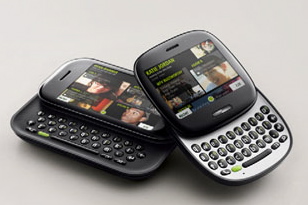
Two months after launch, Microsoft is killing Kin ‘social phone’

By Tim Conneally, Betanews

Microsoft and Sharp's KIN, new Windows Phone

Over this past weekend, Verizon slashed the price of Microsoft’s two Kin phones by 50% to $49 and $29 respectively. Today CNET’s Ina Fried got the word from Microsoft that it is halting further development on the phone line to focus on Windows Phone 7.

The two devices, which were launched a little over two months ago, were marketed to younger users and specialized in social networking and location-based media.

Though the devices were visually attractive and included some noteworthy features, there were significant shortcomings to the platform which immediately became evident. For example, Verizon subscribers had to pay for the same data plan as an advanced smartphone subscriber would, but users did not have the same advanced features, like the ability to download and install apps, or synchronize calendars.

The phones will also not be released in Europe as originally planned, and the team heading Kin development will be folded into the Windows Phone 7 team.

We’ve contacted Microsoft for comment.

Copyright Betanews, Inc. 2010


Add to digg
Add to Google
Add to Slashdot
Add to Twitter
Add to del.icio.us
Add to Facebook
Add to Technorati


MicrosoftVerizonIna FriedSmartphoneWindows Phone 7

Droid X ad pokes fun at iPhone 4 antenna troubles

The world of corporate cheap shots has today been enriched in its number with one supersized ad for one supersized phone. BGR reports that Motorola took out a full-page spread in the New York Times on this final day of June, which was ostensibly dedicated to promoting the positives of its mighty Droid X. But Moto has also followed in the footsteps of Nokia in making a not so subtle jab at the latest king of the smartphone realm. According to the ad, one of the most important things about the Droid X is that:

“It comes with a double antenna design. The kind that allows you to hold the phone any way you like and use it just about anywhere to make crystal clear calls.”

Glad we got that established — next Moto will be telling us the alarm clock on its phones works just fine too. Skip past the break for the untrimmed ad.

Continue reading Droid X ad pokes fun at iPhone 4 antenna troubles

Droid X ad pokes fun at iPhone 4 antenna troubles originally appeared on Engadget on Wed, 30 Jun 2010 17:31:00 EDT. Please see our terms for use of feeds.

Permalink   |  sourceBoy Genius Report  | Email this | Comments

MeeGo for Handsets ‘Day 1’ version released, UI and basic apps revealed

By Tim Conneally, Betanews

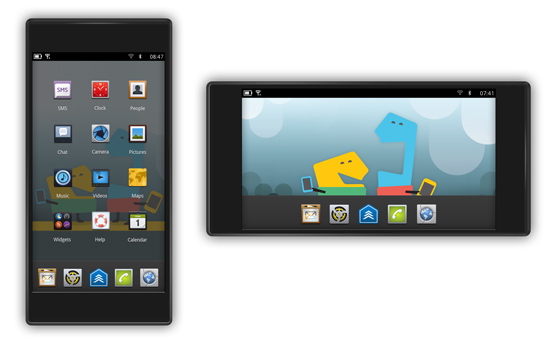
MeeGo for handsets version 1.0
Two major Linux-based mobile operating system efforts, Nokia’s Maemo and Intel’s Moblin were combined earlier this year into a new project going by the name of MeeGo which will ultimately support a wide range of mobile devices, including smartphones, tablets, notebooks, set top boxes, and more.

In March, the core MeeGo distribution infrastructure and OS base were made available to developers so the two code bases, teams, and projects could be combined into a single Linux distribution. MeeGo version 1.0 for Netbooks was released in May, and today, the baseline source code of MeeGo for handsets has been released as a developer preview.

This version includes the Core OS and middleware components, all the MeeGo APIs, incorporating Qt and MeeGo Touch UI Framework; a reference UI (home screen, lock screen, status bar, application launcher, virtual keyboard) and basic applications (Dialer, SMS, Contacts, Fennec Browser, Photo Viewer.)

The official “first version” will be called MeeGo Handset 1.1 and is expected to come in October. To check out this “day one” release, the images can be downloaded from MeeGo’s Day1 site.

Copyright Betanews, Inc. 2010


Add to digg
Add to Google
Add to Slashdot
Add to Twitter
Add to del.icio.us
Add to Facebook
Add to Technorati


NokiaOperating systemLinuxMoblinMaemo

YouTube says it will stick with Flash despite HTML5 video

By Ed Oswald, Betanews

Adobe’s dominant Flash video technologies are seeing their first legitimate challenge from HTML5 and its video tag, but don’t expect YouTube to be joining the ranks of video sites making the transition to the standards based media format any time soon.

The popular social video site said that HTML5 video does not yet meet all of its needs, although it called the format “a big step forward for open standards.” Parent company Google just last month launched its own open source video codec WebM, a possible candidate for the final video standard.

At the moment, there is a split in support for a standard codec. Safari and IE 9 Beta support H.264, while Firefox and Opera support WebM — Google’s Chrome is the only browser to support both. This lack of an agreement is part of the reason why YouTube thinks HTML5 has a way to go yet before it can be considered a serious contender.

YouTube has offered an experimental version of its site since January that does show videos for HTML5-ready browsers, namely Chrome and Safari at the moment, and streams those videos using H.264.

Codec confusion is not the only reason for not pushing ahead with HTML5.

Software engineer John Harding said that streaming issues are another reason, as HTML5 video is delivered over HTTP. This presents a problem in searching through a video: obviously with HTTP the whole video to that point needs to be downloaded in order to view the selected point. Content protection is another issue. With no method available for HTML5, it would make offering products such as the recently-launched YouTube Rentals impossible.

“We’re very happy to see such active and enthusiastic discussion about evolving web standards – YouTube is dependent on browser enhancement in order for us to improve the video experience for our users,” Harding said, but adding the caveat that “Adobe Flash provides the best platform for YouTube’s video distribution requirements.”

One has to wonder if Adobe and Google are tighter than what may immediately be obvious, however. Adobe has thrown its support behind WebM, promising to include the technology in a future version of Flash Player. Google is also doing its part: it has opened the doors to its Android mobile operating system to Flash, something Apple will likely never do.

With the strained relationship between Apple and these two companies, YouTube’s defense of Flash may be more than just a discussion on the merits of HTML5.

Copyright Betanews, Inc. 2010


Add to digg
Add to Google
Add to Slashdot
Add to Twitter
Add to del.icio.us
Add to Facebook
Add to Technorati


YouTubeGoogleAdobe FlashAppleAdobe System