Before you diagnose yourself with depression or low self esteem, first make sure you are not, in fact, just surrounded by assholes.
Thanks Aubrey
Reality Bites
Before you diagnose yourself with depression or low self esteem, first make sure you are not, in fact, just surrounded by assholes.
Thanks Aubrey

The new Beastie Boys music video is pretty awesome, is it not? But considering it was directed by Spike Jonze, that’s not at all surprising. Here’s what (the controversial) Final Cut X and about four days’ time is capable of, via the fine effort from the folks at Wonderful Creative. [Vimeo via Jezebel] More »


Two Lenovo tablets in the same evening? Nah, it’s not the midsummer sun melting your cerebrum, but the same result just might happen after you ingest this one. True to rumors, the ThinkPad Tablet (yeah, that’s seriously the whole name) will indeed be shipping with a full-size USB port and an optional dedicated folio / case, and oddly enough, it’s that very peripheral that could set this unit apart from the masses. While it’s obviously no big chore to find a Bluetooth-enabled keyboard folio for the iPad, you probably won’t find a perfectly matching case with a tried-and-true Lenovo keyboard and a newfangled optical trackpad unless you’re ponying up for this guy. Internally, we’re looking at the same 1GHz Tegra 2 silicon as found in the more consumery IdeaPad K1, a 10.1-inch (1280 x 800) IPS display, a battery good for up to 8.7 hours of use, 1GB of RAM, 16/32/64GB of storage, 3-in-1 card reader, A-GPS, an accelerometer, ambient light sensor, front (2MP) / rear (5MP) cameras, a mini HDMI port (1080p capable!) and Lenovo’s own app launcher / app market.
In our discussions with Lenovo, it was made fairly clear that this guy was being aimed more at companies and less at consumers, but there’s absolutely nothing stopping the latter from enjoying a solid Honeycomb experience here. In fact, the ability to plug in a common mouse or trackpad (or combo device, for that matter) makes it far more useful than many of the ultraslim slates it’ll inevitably go up against. Also unique to the Tablet is a built-in active stylus, which is tailor-made to jot down highly important information cartoons in the company’s homegrown note-taking program.
The full-size USB port also puts it squarely in Eee Transformer territory, with the Keyboard Folio shown above making perfect use of it. In practice, the accessory worked beautifully, and while the $99 price tag may seem a bit steep, it’s not exactly cheap to go out and get a third-party case, keyboard and mouse. The company’s demanding $499 (and up) for it’s Android 3.1-based biz slate, with initial shipments starting today. Peek the hands-on video just after the break!
Continue reading Lenovo ThinkPad Tablet and Keyboard Folio case hands-on (video)
Lenovo ThinkPad Tablet and Keyboard Folio case hands-on (video) originally appeared on Engadget on Wed, 20 Jul 2011 00:02:00 EDT. Please see our terms for use of feeds.

Is the next major Honeycomb tablet play seriously coming from Lenovo? Sure looks it, as the company has just taken the (final) wraps of its IdeaPad K1. For all intents and purposes, the K1 is a LePad dressed up in Android — this one’s packing a 1.0 GHz Tegra 2 chipset, a 10.1-inch (1280 x 800) capacitive touchpanel, Android 3.1, a two-cell battery (good for “up to ten hours”) and a few minor software tweaks that may or may not appeal to you. The Lenovo Launcher is the first of those, acting as a five-pane launchpad that’s completely customizable by the user, and it’s one that can even be disabled if you so choose. The other is the introduction of the Lenovo App Shop, yet another venue to suck down applications for Google’s tablet OS. The reason for its inclusion? According to reps here at the show, it’s there to provide a secure, safe haven for people to download from — the software that makes the cut here has been tested in Lenovo’s labs for stability and security, though the company did confess that certain app developers may fork over a bit of cash to have their program(s) considered for inclusion. More after the break…
Continue reading Lenovo’s Android 3.1-powered IdeaPad K1 tablet hands-on (video)
Lenovo’s Android 3.1-powered IdeaPad K1 tablet hands-on (video) originally appeared on Engadget on Wed, 20 Jul 2011 00:01:00 EDT. Please see our terms for use of feeds.
A CRTC hearing that could determine the internet prices and options available to Canadians has closed with a look at a freshly revised usage-based billing proposal from Bell.
Julio Tang often gets mistaken for an ice cream vendor when he rides the Google Street View tricycle with its bulky white box on the back.

This is big news. Huge actually. Ryan Bidan, Senior Product Manager at RIM, has departed the company. Bidan was part of RIM’s BlackBerry PlayBook team but has now jumped ship and joined Samsung. He’ll take on the role of Director of Product Marketing. This was confirmed by his own Tweet stating that a “It’s official: There’s about to be another #cdnindallas”. Keith Pardy, He’s not the only one in in a high profile position to leave, RIM’s old CMO, Keith Pardy, departed in March, followed by Paul Kalbfleisch, RIM’s VP of Brand Creativity, in May. RIM recently announced they will “streamline operations” with a “headcount reduction”… so it’s not that surprising that people are leaving, just didn’t think it would be one of RIM”s main evangelists.
Source: CrackBerry
Related posts:
Manitoba archeologists have unearthed the bones of a prehistoric sea creature approximatley 80 million years old.

It’s already been rather unceremoniously leaked, but now the Microsoft Explorer Touch Mouse is all sorts of official. Granted, it’s kinda tough to get excited about a mouse, but Redmond’s latest pointer is actually pretty neat. It sports BlueTrack Technology for getting your double click on while using your jeans or carpet as a mouse pad, and a haptic scroll strip that lets you feel the speed at which you’re flicking through the web. Oh, and that strip lets you scroll both horizontally and vertically — not bad for $49.95. Microsoft even claims it can last 18-months on a single set of batteries, just long enough to forget this wireless mouse even has a set of DC cells inside. Check out the extraordinarily brief PR after the break and keep those purchasing fingers holstered for now — this bad boy wont be hitting shelves till September.
Continue reading Microsoft Explorer Touch Mouse coming in September for $49.95
Filed under: Peripherals
Microsoft Explorer Touch Mouse coming in September for $49.95 originally appeared on Engadget on Tue, 19 Jul 2011 15:01:00 EDT. Please see our terms for use of feeds.

Windows users have a few good video players to choose from, and the title of “best” is hotly contested. For its great performance, high number of features, and ability to play just about anything, we recommend SMPlayer for all your video playing needs. More »


Google has been working on multiple profile support in Chrome since we last mentioned it. The latest Canary and Dev channel releases both have the new features, and it’s come a long way, even if its still a little rough around the edges. More »
Last December, the release of Google Maps 5.0 for Android ushered in the next-generation of mobile maps where you can rotate, tilt, and zoom in and out of 3D maps. Whether you’re on the go or playing with a new phone, seeing a 3D skyline spring up in New York City, Zurich, Milan, and other cities is a helpful, fun, and unique experience–an experience we want as many of you as we can to have for your city.
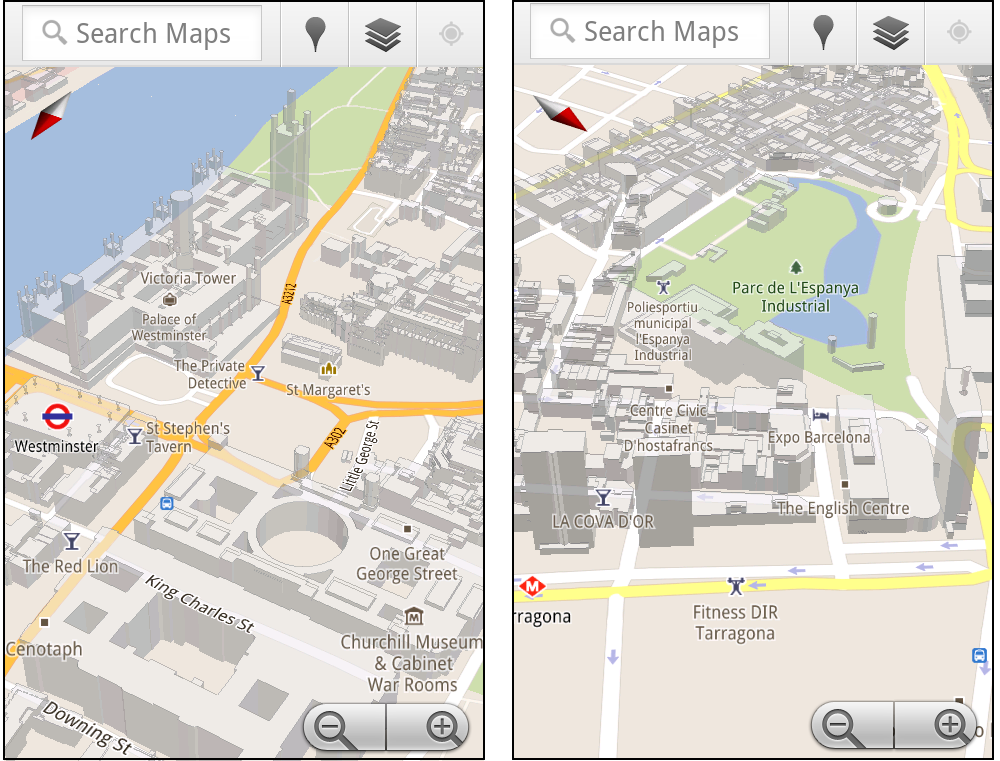
Posted by Brian Brewington, Software Engineer

Tragedy befell the lighthearted game show “Cash Cab” Friday when a producer for the Canadian branch of the show struck and killed an elderly pedestrian in Vancouver.

Google promised that iPhone users would soon be getting a Google+ app of their own, and it’s now here. Not surprisingly, it looks a lot like the Android app, including views of your main stream and nearby users, sharing via Circles, and support for the Huddle group messaging feature. It’s not a universal app, though, so iPad users are still left out for the time being, as are those with an iPod touch, for yet reasons unknown.
Update: Google’s Punit Soni notes that there was a small issue that initially caused a test version of the app to to be served from the App Store. If you grabbed the app as soon as it was available (within the first hour and 40 minutes, specifically), you’ll likely have to re-download it to get the current version (1.0.1.1809).
Google+ app for iPhone now available originally appeared on Engadget on Tue, 19 Jul 2011 11:59:00 EDT. Please see our terms for use of feeds.
Permalink  +Vic Gundotra (Google+) |
  iTunes | Email this | Comments
 As summer descends upon the world, a young Primal eater’s fancy turns to playful frolicking in the sunshine. And when you’re frolicking, the last thing you want to do is slather a bunch of horrible-smelling, greasy, overpriced sunblock all over your body. It makes you slippery and imbues your countenance with a deathly pallor that is very unbecoming. If you could, you’d love to avoid the nasty practice altogether. You’d love to use more alternative methods. Methods that may not have the support of the medical community, but for which supportive research does exist. Seeing as how a common refrain throughout the newly Primal is that sunburns seem fewer and further between than ever before, I’m guessing that there’s something to it. Dietary? Supplementary?
I’ve noticed the same thing in myself and my family, so I got to wondering: what about going Primal, exactly, might be having this effect? And if something is protecting us from the sun, and it’s not just in everyone’s heads, what else can we do to bolster our natural sunblock? What can we recommend to friends and family who aren’t quite on board with the whole deal but still want protection from the sun? Let’s take a look at some potential supplements and dietary strategies. I’ll reference research as often as possible, but I’ll also draw on anecdotal experience, both personal and from the community at large.
Lycopene, that famous carotenoid found in tomatoes, has been shown in a recent in vivo RCT to protect humans against sun damage. Healthy women, aged 21-47, who ate 55 g of tomato paste containing 16 mg of lycopene every day for 12 weeks experienced significant protection against acute – and potentially long term – sun damage. Remember that cooked tomatoes, and tomato products like paste and sauce, offer far more bioavailable lycopene than raw tomatoes. If you’re counting, 55 grams of tomato paste is a hair over 3 tablespoons worth.
The super-antioxidant astaxanthin is found in algae, the organisms that eat it, and the organisms that eat those organisms (like salmon, shrimp, and pink flamingo – the pink/red color gives it away). It has been getting some attention as an “internal sunscreen.” Does it stack up? Well, here’s a study on isolated human skin cells, in which astaxanthin definitely protects against UVA damage. And here’s another study on isolated skin cells showing its protective effects. But those are limited. Does the effect persist in real life settings? In other words, does ingesting astaxanthin supplements or food that contains astaxanthin offer protection from UVA? This hairless mouse study suggests that it might; astaxanthin was more effective than even retinol. I’d say it looks promising, and I’m always interested in an excuse to dine on pink flamingo thigh.
A common anecdotal report is that supplementing vitamin D increases sun tolerance and protection against sun damage, and a recent study seems to confirm this. Various forms of the vitamin D prohormone offered various protections against UV damage in a mouse model: reduced sunburn, lowered incidence of tumor development. Huh, imagine that! Getting sun gives you vitamin D, which in turn protects you from too much sun. It’s funny how these things work out. Nature can be very elegant.
A recent study out of Australia found that adults with the highest serum concentrations of DHA and EPA had the least “cutaneous p53 expression.” What’s the significance of cutaneous p53 expression? When your skin is in danger of damage from the sun, p53 expression is upregulated to protect it, and high p53 immunoreactivity can lead to melanoma. The fact that high DHA/EPA meant low p53 immunoreactivity suggests that the omega-3s were protecting the skin. And although the study’s authors noted that high serum omega-6 content didn’t seem to correlate with high p53 activity, I think a likelier explanation is this: omega-6 is so prevalent in the modern Australian diet, that even “low” levels are still above the threshold for increased susceptibility to sunburn. Going higher than that threshold won’t make things any worse, and it won’t show up in the statistics. Drop that omega-6 intake to 2% of calories, though, while getting an equal amount of omega-3s? I bet you’d see some incredible UV-resistance.
This is slightly redundant in light of the last suggestion – after all, if you’re limiting PUFAs, you gotta eat some saturated fat – but I think it’s worth mentioning. I hear about people bumping up their saturated fat intake and improving their UV-resistance all over the place, and I’ve experienced the same thing myself, but I’d never seen it mentioned in the literature. Well, here’s a cool rodent study in which mice were either given a saturated fat-enriched diet or a PUFA-enriched diet. No word on the exact composition of the two diets. When both groups of mice were injected with melanoma cells, “the initiation time required for visible tumor growth in mice receiving the polyunsaturated fat diet was significantly less than that in mice receiving the saturated fat diet.” A higher-saturated fat diet was protective, while a higher-PUFA diet was not. If you’re gonna be out in the sun, better eat your butter, palm oil, and coconut oil, eh?
Tea, especially green tea, offers a complex arsenal of antioxidant compounds. How it works and what’s doing it isn’t fully understood, but it’s generally accepted that drinking green tea is a smart move and a mainstay of many healthy traditional cultures. Unsurprisingly, there’s also evidence that dietary green tea, specifically its polyphenols, inhibit the development of skin tumors by controlling inflammation and preventing DNA damage. Topical green tea extracts applied directly to the skin also offer photoprotection.
Proanthocyanidins, which can be found in wine and grape seeds, berries like blueberries and chokeberries, nuts like hazelnuts and pistachios, and certain niche grains like sorghum and barley, have been efficacious in preventing UV damage in hairless rodents. Whether it works for hairless apes remains to be seen, but drinking wine and eating berries sound like fine ideas regardless of their photoprotective efficacy. Actually, score one for the hairless apes who quaff wine: a recent study found that people who supplemented with grape seed extract (high in anthocyanidins) had a significantly lower risk of skin cancer. It sounds promising.
Resveratrol gets a lot of publicity for its possible anti-cancer, cardioprotective, and lifespan enhancing qualities, but it’s also gaining steam as a potential photoprotective agent. This study found that once incorporated into skin cells, resveratrol protected them from UV damage. Topical resveratrol seems viable, too, but I can imagine rubbing resveratrol into your sun-exposed skin would get expensive rather quickly.
Well, that’s what I came up with. I think the first four appear to be the most effective, but if you have a real problem with burning, it might be worth checking out all the strategies I mentioned. I’m also interested in what’s worked for you. Have you tried the above methods? Did they work? Fill us in and thanks for reading!
Related posts:

RIM sure is working fast to bring its 500,000-strong BlackBerry Playbooks up to functional par. The tablet’s been on the market for three short months and is already set to receive its fourth software update. This go ’round, RIM added the ability to save attachments to a removable SD card or your phone’s internal storage, extract zip files from email (although you’ll have to use Bridge and port from your BlackBerry smartphone), a pinch-to-zoom feature for video viewing and — winner of the duh award — portrait viewing for photos. Also, the software now supports 15 additional languages — great news if you speak Galician. If you’re planning on picking up this QNX tab, you’ll receive the v1.0.7 update as part of the setup process. Current owners can wait for an update notification, or just pull it manually. So, what are you waiting for? Get downloading.
Update: And it’s gone. Seems some folks who downloaded the update were having connectivity issues using BlackBerry Bridge. RIM posted on Twitter saying users should expect a fix later this week.
BlackBerry PlayBook update brings zip extraction, more storage options for attachments (updated) originally appeared on Engadget on Tue, 19 Jul 2011 11:02:00 EDT. Please see our terms for use of feeds.
Permalink MobileBurn | BlackBerry Blog, BlackBerry (Twitter) | Email this | Comments

SaskTel has released the Novatel Ovation MC547 Mobile Internet Stick, this is capable of reach download speeds of 42 Mbps, but SaskTel honourably notes they’re not there yet. If you choose to get this you’ll hop onto their 21mbps network until their new Dual Cell HSPA+ launches. If your mobile phone doesn’t come with the capability of creating a Wi-Fi hotspot then getting a internet stick is a good idea, the MC547 is $199.99 outright and ranges down towards a 3-year contract for $59.99.
Source: SaskTel
Related posts:
 Google is now making $3 billion a month in advertising — the majority of which comes from little text ads next to search results.
You might wonder how that’s possible, and who’s spending that much money on search ads.
The answer, according to Larry Kim — the founder of a company that sells software to analyze text ad campaigns — is in industries where a customer is worth a lot of money over the long-term.
Wordstream, Kim’s company, analyzed search terms that advertisers pay the most to have their ads show up next to, and grouped the top 10,000 by industry, using its own software. They multiplied the so-called cost-per-click — what advertisers pay Google for each time someone clicks on their ads — times the number of times people search on that word. They then divided that pie up by keywords that fit different industries.
The top industry? Insurance, where companies eager to outbid their rivals for new customers pay Google more than $54 for a click. Together they make up 24 percent of Google’s revenues from search advertising, according to Wordstream’s calculations. Companies in the business of issuing loans come second, with CPC rates of more than $44 — providing nearly 13 percent of Google’s revenues.
“There are lots of lawyers finding clients,” Kim said. “Even if they have to pay for 50 to 100 clicks to get a client, they can get that back in a court case that last for years, all the while billing $500 an hour. The same thing happens with CRM software, where companies pay a high month fee.”
(For more on how Google prices ads and tries to ensure ads are relevant, check out this great feature story from Wired Magazine about the money-making machine that is Google ad auctions.)
Speaking of lawyers, the mortgage and legal industries show up third and fourth, respectively.
Rounding out the top 20 is an odd entry — Cord Blood.
“I didn’t know what that was,” Kim told Wired.com. “Turns out the industry has to with rich parents preserving their child’s umbilical cord with idea that the stem cells in it will be able to cure diseases in the future. And storage of cord blood has huge upfront cost and substantial ongoing payments.”
Again — an industry that can make lots of money from a customer over a long period of time — making it not unwise to pay $27 per click, even if only one out of 50 of those who click on the ad actually signs up for your service.
The top 20 categories account for about 70 percent of Google’s ad revenues, according to Wordstream’s calculations. Wordstream, which offers some free keyword analysis tools, sells software that lets companies and search engine marketing consultants organize and manage their advertising campaigns.
As for the remaining 30 percent?
About 1000 different categories combine to make up that last 30 percent, each getting thinner and thinner — which Kim refers to as the “Long Tail,” a reference to the Wired magazine article and later book by Chris Anderson. Those categories together “represent a tremendous amount of spend,” Kim said.
Infographic courtesy Wordstream

Perhaps you recall hearing, back at CES, about GM’s aftermarket mirror that would make the OnStar service available to most cars, including those from its most hated rival in Dearborn. No? Don’t worry, here’s the skinny: the OnStar FMV will let you have the company’s popular blue button technology in over 90 million automobiles. Meaning that almost anyone can now reap the benefits of features like automatic crash response, turn-by-turn navigation and hands-free calling. You know… unless you’re cruising in the General Lee, or something. Selling for $299.99, plus a $75 installation charge and $18.95 per month ($199 yearly) subscription, the high tech rear-view mirror will be on shelves at Best Buy starting July 24th and is now available for pre-order. Before you throw down the Benjamins for this automotive security blanket, you might want to double check that your car is compatible — check the full PR to find out how.
Continue reading OnStar FMV available at Best Buy July 24th for $300
OnStar FMV available at Best Buy July 24th for $300 originally appeared on Engadget on Tue, 19 Jul 2011 06:45:00 EDT. Please see our terms for use of feeds.
Permalink | OnStar | Email this | Comments


 Jethro Nededog

