Bell to start activating HSPA devices in Saskatchewan on June 27th


Thanks to one of our tipsters for letting us know that Bell will finally be able to activate HSPA devices in Saskatchewan. Employees have started training and the go live date is expected to be on June 27th. We’ve also been informed that Bell will have “have 98% coverage” and all HPSA devices will be available. We’re getting more info soon and will report back.

Update: A press release just went out that noted they will launch “its 4G wireless broadband network to Saskatchewan customers next week” and have “mobile download speeds up to 21 megabits per second (Mbps) and typical speeds of 7 to 14 Mbps”. In addition, you’ll be able to score a Bell 4G device at over 50 locations including Bell authorized dealers and at The Source locations.

(Thanks tipster!)

Related posts:

  1. SaskTel, TELUS & Bell ink Network Sharing Agreement that brings HSPA devices to Saskatchewan by 2011
  2. Bell expands HSPA+ reach into Saskatchewan and Northern Quebec
  3. TELUS to announce Saskatchewan HSPA+ coverage soon?

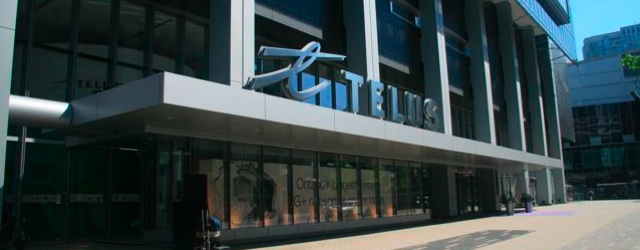
TELUS axes cancellation fees for customers who upgrade early


TELUS recently offered up the option for customers to unlocked their phone, recently lowered roaming rates but increased pay-per-use text rates… however, today announced they are axing the cancellation fees for those who want to upgrade to a new device (this has always been a sore spot for customers pay). Telus noted that “When TELUS consumers and business customers want to end their agreement early to upgrade to a new TELUS device they only need to pay their device balance displayed on their monthly bill – the remaining portion of the device credit they received when they purchased their previous device.”

This gives customers the option to upgrade at anytime, without a charge. In addition, TELUS also notes that if you want to leave and go to another carrier you don’t have to pay a cancellation fee, but pay the balance plus a “small administrative account closure charge of $50″.

Thoughts?

Source: CNW

Related posts:

  1. Rogers to give customers option to upgrade early, will charge “Early Upgrade Fee”
  2. TELUS intros new upgrade structure with the “Early Device Upgrade Fee” (EDUF)
  3. New TELUS cancellation policy for those who “activated or renewed on or after November 21st”

Internet names to expand far beyond dot-com

Internet minders voted Monday to allow virtually unlimited new domain names based on themes as varied as company brands, entertainment and political causes, in the system’s biggest shake-up since it started 26 years ago.

Fujitsu K supercomputer now ranked fastest in the world, dethrones China’s Tianhe-1A

Remember the K — the Fujitsu supercomputer that promised to do a whopping ten petaflops by the year 2012? Well, it hasn’t reached that threshold just yet, but according to the latest Top 500 supercomputer list, it’s still faster than any other machine on Earth. In fact, the top-ranked beast is more powerful than the next five supercomputers combined, consumes enough electricity to power about 10,000 homes for a full year, and is capable of churning out about 8.2 quadrillion calculations per second — three times as many as what runner-up (and former number-one) Tianhe-1A can process. Today’s announcement marks the first time since 2004 that a Japanese creation sits atop Top500.org’s rankings, but Fujitsu isn’t exactly resting on its laurels. Before deploying it next year, engineers at the Riken Advanced Institute for Computational Science are aiming to add about 100,000 cores to the K’s collection of 548,352, which would provide it with even more computational muscle, and likely spell doom for all of humanity. Find out more in the PR after the break.

Continue reading Fujitsu K supercomputer now ranked fastest in the world, dethrones China’s Tianhe-1A

Fujitsu K supercomputer now ranked fastest in the world, dethrones China’s Tianhe-1A originally appeared on Engadget on Mon, 20 Jun 2011 08:37:00 EDT. Please see our terms for use of feeds.

Permalink The New York Times  |   | Email this | Comments

Hybrid rocket / seaweed jet ready to fly in 2050, keep emissions above ozone (video)


What’s cooler than jetting from Paris to Tokyo in under three hours? Getting there in a biofuel burning hybrid rocketplane. The recently announced superjet, the Zehst (short for “Zero Emission Hypersonic Transportation”), loopholes around the whole pollution angle by only using its rocket engines in the stratosphere. Below the ozone however, seaweed-biofuel powered jet engines will kick in for some keen, green landings. Don’t get too excited though, the EADS won’t even have a prototype ready until 2020, and commercial flights aren’t expected to follow until the hump of the century. Look on the bright side though, you’ve still got that airline-approved Galaxy Tab to keep you occupied for the next four decades of long, dark, redeyes. That’s almost as cool, right?

Continue reading Hybrid rocket / seaweed jet ready to fly in 2050, keep emissions above ozone (video)

Hybrid rocket / seaweed jet ready to fly in 2050, keep emissions above ozone (video) originally appeared on Engadget on Mon, 20 Jun 2011 08:14:00 EDT. Please see our terms for use of feeds.

Permalink AIN TV (YouTube), Daily Mail  |   | Email this | Comments

Sega’s online Pass hacked, 1.3 million user passwords stolen

Let’s bid a bitter welcome to Sega, the latest entrant to the newly founded club of hacked online communities. Sega Pass, the company’s web portal, suffered a breach of its defenses on Thursday, which has now been identified to have affected a whopping 1.29 million users. Usernames, real names, birth dates, passwords, email addresses, pretty much everything has been snatched up by the malicious data thieves, with the important exception of credit / debit card numbers. We’d still advise anyone affected to keep a watchful eye on his or her banking transactions — immediately after changing that compromised password, of course. In the meantime, Sega’s keeping the Pass service offline while it rectifies the vulnerability; it’ll be able to call on an unexpected ally in its search for the perpetrators in the form of LulzSec, a hacker group that boasted proudly about infiltrating Sony’s network, but which has much more benevolent intentions with respect to Sega. What a topsy-turvy world we live in!

Sega’s online Pass hacked, 1.3 million user passwords stolen originally appeared on Engadget on Mon, 20 Jun 2011 05:41:00 EDT. Please see our terms for use of feeds.

Permalink The Inquirer  |  sourceReuters  | Email this | Comments

DARPA setting up a $130 million ‘virtual firing range’ to help battle cyber attacks

The US government is serious about online security, just ask any one of its cyber commandos. Adding to its arsenal for battling the big bad hackers, Reuters reports that DARPA is working on a National Cyber Range, which would act a standalone internet simulation engine where digital warriors can be trained and experimental ideas tested out. Lockheed Martin and Johns Hopkins University are competing to provide the final system, with one of them expected to soon get the go-ahead for a one-year trial, which, if all goes well, will be followed by DARPA unleashing its techies upon the virtual firing range in earnest next year. The cost of the project is said to run somewhere near $130 million, which might have sounded a bit expensive before the recent spate of successful hacking attacks on high profile private companies, but now seems like a rational expenditure to ensure the nuclear missile codes and the people crazy enough to use them are kept at a safe distance from one another. DARPA has a pair of other cleverly titled cybersecurity schemes up its sleeve, called CRASH and CINDER, but you’ll have to hit the source link to learn more about them.

DARPA setting up a $130 million ‘virtual firing range’ to help battle cyber attacks originally appeared on Engadget on Mon, 20 Jun 2011 03:49:00 EDT. Please see our terms for use of feeds.

Permalink PCWorld  |  sourceReuters  | Email this | Comments

New Windows 8 leak hints at SMS support, feature licensing, geo-location

Considering its adoption of the Windows Phone metro style, its not surprising to hear that Windows 8’s latest leaked build sports a metro-inspired virtual keyboard and traces of code that could bring SMS 3G enabled Windows 8 devices. An App store and feature licensing, however? That’s interesting. Buried in the Windows 8 code, Microsoft enthusiasts have found strings that may hint at a Windows App store, and the ability to activate or deactivate certain OS features through that store. Will this be the end of “Home,” “Pro,” and “Ultimate” editions of Microsoft’s flagship product? We wouldn’t hold our breath. Still, Windows à la Carte doesn't sound half bad. Hit up the source link to see the code (and speculation) for yourself.

Continue reading New Windows 8 leak hints at SMS support, feature licensing, geo-location

New Windows 8 leak hints at SMS support, feature licensing, geo-location originally appeared on Engadget on Mon, 20 Jun 2011 02:29:00 EDT. Please see our terms for use of feeds.

Permalink   |  sourceRedmond Pie, WinRumors  | Email this | Comments